Laser Cleaning Machine

There are many cost, health, safety and environmental benefits to using Laser Cleaning as an alternative to abrasive blasting or chemical cleaning.

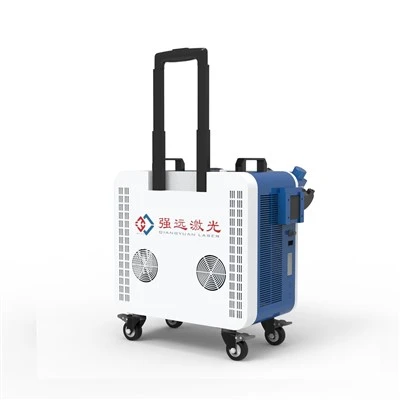
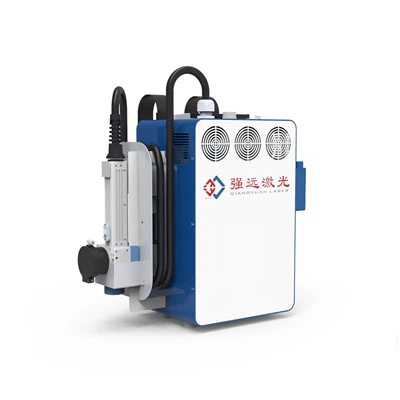
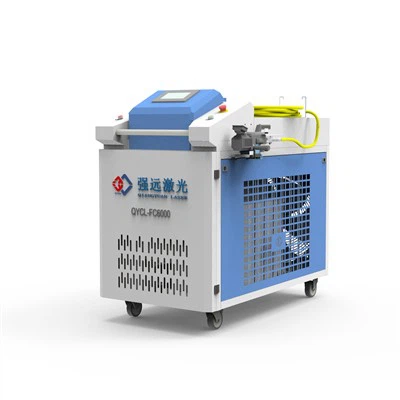
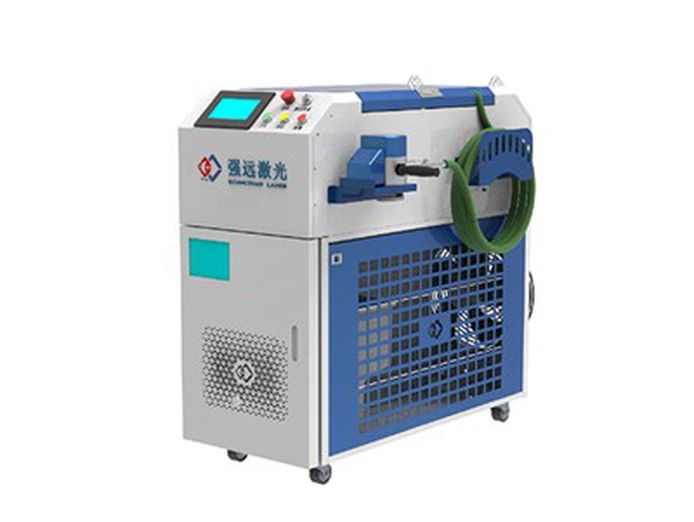
SDQY laser cleaning machine is available in continuous wave and Pulsed modes. Continues wave laser including 1000-1500-2000-3000w, Fiber pulse laser including 50-100-200-300-500-1000w.

Company Profile


Shandong Qiangyuan Laser of SDIIT Ltd. (SDQY Laser) founded by Laser Institute of Shandong Academy of Science since 1978. A leading enterprise focusing on the R&D, manufacturing, sales and service of laser cleaning, welding, cutting, cladding machines and solutions.


SDQY Laser has a multi-disciplinary doctoral innovation team composed of optical, mechanical, electronic, computer, materials science and other specialties.

Why Choose Us

Professional Team

The company relies on the Laser Research Institute of Shandong Academy of Sciences and has a multi-disciplinary high-level R&D and innovation team in optics, mechanics, electronics, etc.

Complete After-Sale Service

Our after-sales service team have professional skills and knowledge, and can provide accurate and effective solutions in installation guidance, usage training, parts replacement, regular maintenance, etc.

Safety Assurance

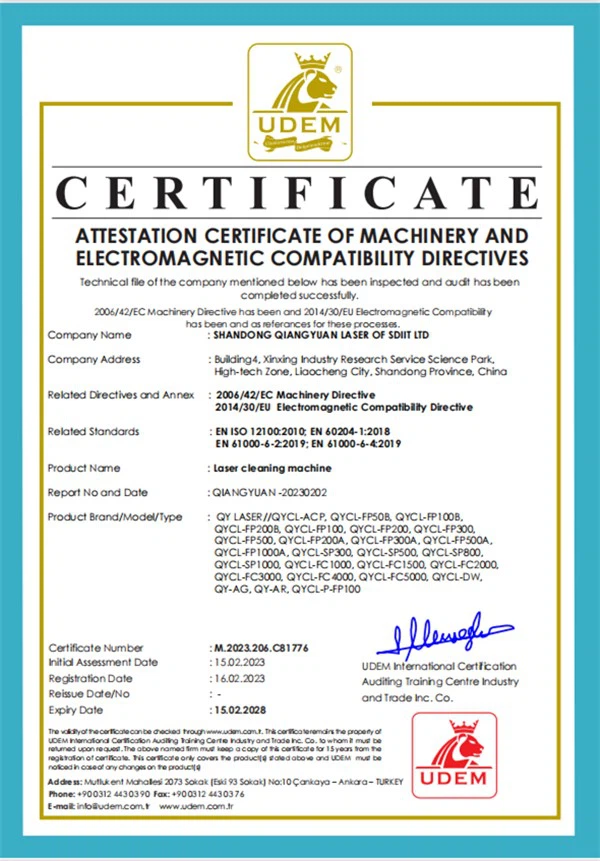
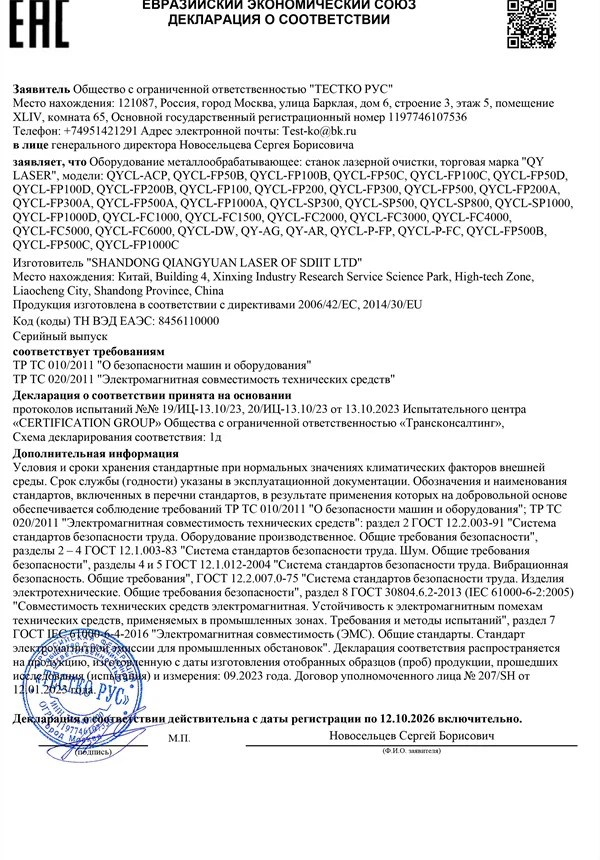
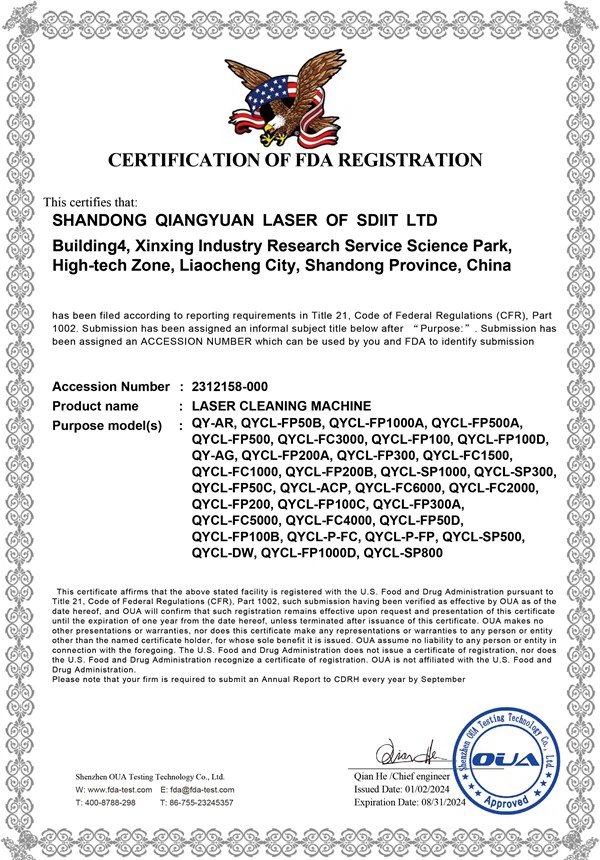
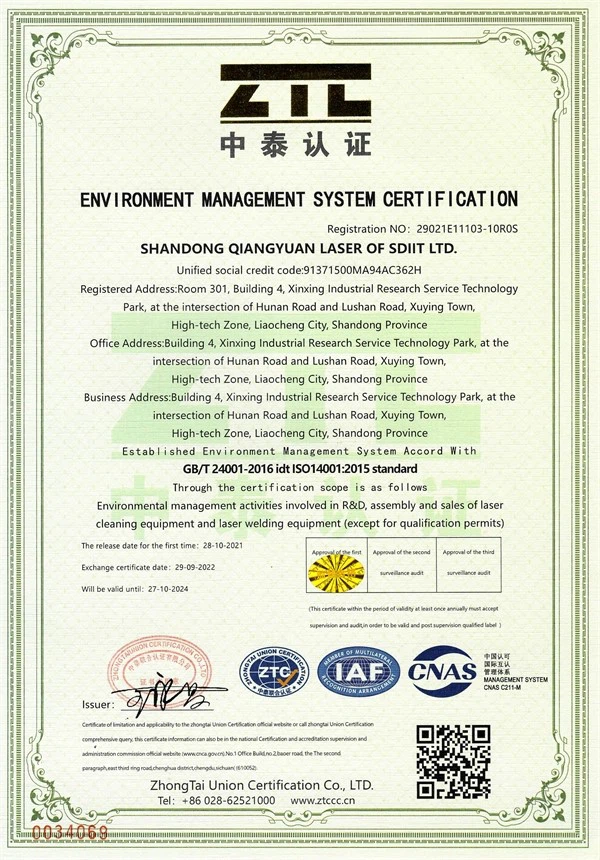
SDQY Laser has passed ISO9001, ISO14001, ISO45001, CE, EAC, FDA, SGS and other certifications.


Customization Requirements

Provide personalized services in terms of solutions, appearance design, etc. based on customers' specific needs and preferences.
First 1234567 Last 1/11

What is Laser Cleaning Machine?


A laser cleaning machine is a device that uses laser beam technology to remove coatings, rust, and contaminants from the surface of a material.


The Laser Cleaner is an environmentally friendly cleaning tool that uses nanosecond or picosecond pulsed lasers to irradiate the surface of the workpiece to be cleaned so that the surface of the workpiece instantly absorbs the focused laser energy to form a rapidly expanding plasma (highly ionized Unstable gas) to make the surface oil, rust, dust, coating, oxide layer or film vaporized or peeled off, to efficiently remove surface attachments.

Benefits of Laser Cleaning Machine
 

Precision

Laser cleaning machines can target specific areas with pinpoint accuracy, ensuring thorough cleaning without affecting surrounding areas. This precision is particularly advantageous for intricate components or delicate surfaces where traditional methods may cause damage.

Safety

Unlike abrasive techniques that generate dust, fumes, and hazardous waste, laser cleaning is a clean and environmentally friendly process. It eliminates the need for harmful chemicals or abrasive materials, making it safer for both operators and the environment.

Versatility

Laser cleaning machines can be used on a wide range of materials, including metals, plastics, ceramics, and composites. Whether removing rust, paint, oxides, or contaminants, laser cleaning offers a versatile solution for various cleaning challenges.

Efficiency

With rapid cleaning speeds and minimal setup time, laser cleaning machines offer unparalleled efficiency compared to traditional methods. They can significantly reduce downtime and increase productivity, ultimately leading to cost savings for businesses.

 
Type of Laser Cleaning Machine
 
01/

Handheld Laser Cleaners
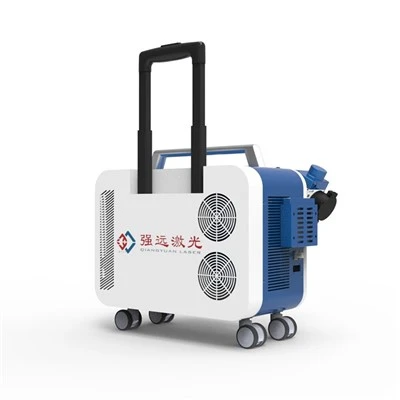
Handheld laser cleanerHandheld laser cleaning systems are workstations on wheels. They’re larger than what most people expect of a handheld device, but they’re still easy to move around. The “gun” held by the operator can be positioned as needed to reach any area on large workpieces.

02/

Robot Laser Cleaning Machines
Laser cleaning systems can be mounted on robots to automate cleaning operations in robotic cells. They are equipped with advanced autofocusing systems to clean complex parts with high precision. The robot’s high freedom of movement allows the laser to clean various shapes with simple, automatic adjustments.

03/

Conveyor Laser Cleaning Machines
Conveyor Cleaning MachineLaser cleaners can be installed directly on conveyors to automate contaminant removal and surface texturing before operations like welding or coating, providing complete surface preparation in a single step. Advanced features can be used to automatically manage inconsistencies in part positioning as well as process large parts with several areas that need to be cleaned.

04/

OEM Laser Cleaning Systems
LXQ Fiber Laser MarkerThe difference between a laser cleaning system and a laser cleaning machine isn’t always clear. Laser cleaning systems are OEM devices that can be integrated into fully custom solutions, typically with the help of a system integrator or machine builder. Laser cleaning machines, on the other hand, are predesigned solutions ready to be integrated in production lines.

What Materials Can Be Laser Cleaning Machine Cleaned?
 

When it comes to the versatility of laser cleaning technology, the range of materials that can benefit from this process is extensive. From metals to fabrics and everything in between, laser cleaning solutions have proven to be effective.
 

Metals: Laser cleaning systems have found widespread use in the restoration and maintenance of metal surfaces. Metals such as steel, aluminum, copper, and brass can be cleaned using lasers.


Plastics: Various types of plastics, including acrylic, polycarbonate, and ABS, can also be effectively cleaned with lasers.


Glass: Glass, with its sensitive and potentially fragile nature, can greatly benefit from the non-contact cleaning power of lasers. Laser cleaning is suitable for cleaning glass surfaces, including windows, lenses, and optical components, without causing scratches or damage.


Wood: Wood surfaces, due to their porous nature, can be difficult to clean with traditional methods. However, lasers offer an effective solution for cleaning wood surfaces without causing undue damage.


Stone and Concrete: Laser cleaning has made a significant impact in the care and restoration of historical and architectural stone and concrete surfaces. This technology allows us to remove dirt, mold, pollutants, graffiti, and other unwanted substances from the surface of stone and concrete without causing damage to the substrate.

200w 300w 500w 1000w Top Hat Pulse Laser Cleaning Machine

Industrial Applications of Laser Cleaners


Laser cleaning technology is widely in use in a number of different industries. Initially, it was majorly used in the metallic and metallic manufacturing industry. However, in recent times, with the advent of modern laser systems, the technology also finds its application in non-metallic material cleaning.


Surface Cleaning
This type of cleaning is for the removal of rust from the top surface of the material. Usually, surface cleaning is the widest application of laser cleaning machines. Cleaning activities like paint removal, degreasing, and restoration of the material are all types of surface cleaning.
The rust removal using laser rust removing cleaners is widely found in the heavy metals manufacturing industry. DE rusting or deoxidation is required very often in most of the heavy metal and manufacturing industries. Therefore, the rust cleaning laser is the ideal choice for such industries.
Another major application of surface cleaning with laser cleaning machines is laser spot repair. In this method of cleaning only spots of impurities/rust need to be removed from the surface of the material.


Cleaning of Moulds
Cleaning mold is a very difficult task otherwise. However, with laser cleaning machines, you can easily reach every nook and corner of the molds and clean them of any impurities.
This type of cleaning process is widely used in the food and consumption industry. Because most of the food items need to be packaged in extra clean environments. Therefore, the ideal choice of cleaning the containers with speed and accuracy is by using the laser cleaning process.


Cleaning Welds
Welding leaves behind surface deposits that need to be removed for the final furnishing of the product. Therefore, laser cleaning machines play an important part in the removal of weld spots for cleaning the unit.

Laser cleaning is suitable for almost all types of metallic alloys and the treatment of their welds. Therefore, it works wonderfully well with aluminum alloys, stainless steel, and other hard metal and their alloys. Thus, you can easily clean the weld spots from the surface of the materials. All of this can be achieved at great speed.

 
How to Choose a Laser Cleaning Machine for Rust Removal?

Choose The Right Laser Delivery System You Will Need
Handheld and automatic delivery options are available for laser cleaning. Handheld options perform effectively well for projects that require mobility, distinct surface geometries, and variable quantities of parts. However, an automated delivery system is preferable for routine, repeated cleanings.


Power Level Selection
When it comes to laser cleaning, there is no universal method that can be applied. Because of this, cleaning lasers come in three different power ranges, each of which is customized to a specific set of requirements


The Low-Power Laser Solutions
Low-powered is not synonymous with ineffective. Low-power laser solutions offer a gentle, high-precision cleaning ideal for historic renovation, de-coating, and limited treatment areas. It uses short laser light pulses with the same intensity as other operated cleaners but is suitable for products such as artifacts, valued keepsakes, and any application requiring gentle cleanup.


The Mid-Power Laser Solution
Mid-power lasers can quickly clean larger areas than low- or high-power ones. It’s fully digital, and you can operate it with ease. The optics system that backs up each laser makes it ideal for removing paint and lubricant from planes before welding and eliminating corrosion in specific areas on plane wings.


The High-Power Laser Solution
High-power laser systems are among the most potent available. The app’s interface is intuitive, with a touch screen and live adjustments. It is superior to other lasers in energy output per laser light pulse. It is ideally suited for industrial applications such as removing harmful coatings, decontaminated nuclear facilities, and eliminating metal corrosion.

How to Laser Cleaning Machine work?


50w 100w Backpack Pulsed Laser Cleaning Machine

Laser cleaning is the process of removing contaminants, such as rust, oil, oxides, etc., on steel and other surfaces using laser technology. Laser cleaning is achieved through laser ablation. It allows the selective removal of the contaminants with little impact on the substrate.


Laser cleaning uses a machine that aims a laser pulse at high power onto the rusty surface of a material. The laser energy is absorbed by the organic material lying on the surface of the substrate while the non-organic substrate remains untouched.


The laser beam is passed over the surface until the preferred depth and area have been completely rid of the rust.At low flux, the laser energy from the beam ablates the surface while vaporizing the rust. At high flux, the laser energy converts the rust or other unwanted material to plasma. Both low and high flux get the job done, but their use depends on the type of surface in question.


There are two distinct laser cleaning processes; Coating removal and surface decontamination. The former is characterized by removing a layer of unwanted material from the surface of a substrate. It is most effective when the physical and chemical composition of the layer differs from the substrate. Such include insulation, primers, corrosion preventive coatings, rubber or paint. Normally, the low flux laser beam is used for this. The latter involves removing the entire upper layer of the substrate and requires high flux laser beams.

Comparing Laser Cleaning Machines And Dustless Blasting


Precision And Control
●Laser Cleaning Machines: Laser cleaning machines are known for their extremely precise cleaning. The ability to control the laser's intensity and focus allows for meticulous cleaning without damaging the underlying surface. This makes it particularly useful for delicate tasks, such as cleaning precise metal parts or utilizing laser rust removal to clean rust and other contaminants off intricate machinery parts.

●Dustless Blasting: While dustless blasting is less precise than laser cleaning machines, it offers a broader approach suitable for larger surfaces and heavier coating or rust removal. The wider blast pattern and tailored blast pressure and method ensures efficient coating removal of rust, paint, grime, and other contaminants, making it ideal for preparing surfaces in the industrial and commercial sectors.


Versatility
●Laser Cleaning Machines: The versatility of laser cleaning machines is evident in their application across various industries, from automotive parts preservation to medical equipment cleaning. The non-abrasive nature and precision control of laser technology makes this method suitable for sensitive surfaces that require a gentle touch or sufficient cleaning prior to laser welding.

●Dustless Blasting: Dustless blasting excels in versatility, capable of handling multiple substrates and applications. Whether removing graffiti from walls, prepping vehicles for repainting, cleaning marine vessels, or other coating removal projects, dustless blasting offers a robust solution that can adapt to different materials and job requirements.


Environmental Impact
●Laser Cleaning Machines: As an eco-friendly alternative, laser cleaning machines produce minimal waste and require no chemicals or abrasive media. The primary byproduct is the material removed, which is often captured and contained, reducing environmental contamination.

●Dustless Blasting: Dustless blasting significantly reduces dust pollution when wet blasting, making this method a safer option for operators and the environment. However, it requires the use of abrasive media, which needs proper disposal to prevent environmental harm.


Cost And Accessibility
●Laser Cleaning Machines: The initial laser cleaning machine cost can be high, and the technology's proprietary parts may require higher maintenance costs and could be hard to source when needed. However, the precision and efficiency can lead to cost savings in specific applications over time.

●Dustless Blasting: Dustless blasting systems are generally more affordable and accessible. The lower upfront cost and versatility make it a practical choice for many businesses, providing a balance between effectiveness and budget considerations.

 
Maintaining A Laser Cleaning Machine

Manufacturers of laser cleaners use high-quality materials such as aluminum and stainless steel, along with advanced precision engineering, to ensure durability and optimize performance. Modern machines often include features like variable power settings, adjustable focus, and ergonomic designs for user comfort. Regular maintenance of precision parts is crucial for laser cleaners to function effectively and safely.


Cleaning And Inspection
Regularly inspect the laser machine for any signs of wear and tear, and clean it thoroughly after each use. Pay special attention to the optics to ensure they are free of dust and debris, which could affect the laser's performance.


Cooling System Maintenance
Ensure the cooling system is functioning properly to prevent the laser from overheating. Check coolant levels and inspect the system for any leaks or blockages.


Optics Care
Keep the optics clean and properly aligned. Misalignment or contamination can significantly impact the quality and precision of the laser beam. Use appropriate cleaning tools and solutions as recommended by the manufacturer.


Replace Worn Parts
Replace any worn or damaged parts of the laser machine promptly to prevent breakdowns during use. Following the manufacturer's maintenance schedule is crucial to keep the equipment in optimal working condition and prolong its lifespan. Many laser cleaning machine parts are proprietary, unlike a dustless blaster, so consider this when budgeting for maintenance.

 
Our Factory

SDQY Laser is a State-level High-tech Enterprise, Innovative Enterprises in Shandong Province, Advanced Laser Technology Innovation Center, Liaocheng New Research and Development Institution.


Our products has exported to European, American, Middle Eastern, Australian, African countries and regions, we provided customers with high quality laser solutions.

productcate-324-243
productcate-1-1
productcate-1-1
productcate-1-1
 
Certificate


productcate-1-1
productcate-1-1
productcate-1-1
productcate-1-1
FAQ

Q: Is laser cleaning cost effective?

A: Laser beam cleaning offers high precision and reproducibility, therefore saving enormous costs in industrial series production. The investment in current laser technology is often many times cheaper than that in, for example, wet chemical alternatives.

Q: What is the method of laser cleaning?

A: Laser cleaning is the process of cleaning a surface by transforming its coating into gas. It begins with a high peak power laser with short pulse frequencies shooting into the surface of a film and heating it. Then, the coating is removed by vaporisation.

Q: What is the difference between laser cleaning and plasma cleaning?

A: Plasma cleaning and laser cleaning are surface cleaning methods used to prepare surfaces for subsequent manufacturing processes such as welding, coating, and adhesive bonding. While laser cleaning relies on the power of light to remove contaminants, plasma cleaning uses an ionized gas called plasma.

Q: What can you clean with a laser cleaning machine?

A: Laser cleaning systems have found widespread use in the restoration and maintenance of metal surfaces. Metals such as steel, aluminum, copper, and brass can be cleaned using lasers. This is often used for: Rust and oxide removal.

Q: Do laser cleaning machines really work?

A: Laser cleaning is technology that is more effective, safer and superior to traditional methods of cleaning; however, laser cleaning is not infallible. While lasers are ideal to use on most surfaces, there are limitations.

Q: How do I choose a laser cleaning machine?

A: Considerations When Choosing a Laser Machine
The surface area and geometry that needs to be cleaned.
The substrate and the type of contaminant.
The thickness of the contaminants.
The approximate cleaning time you need.
The subsequent steps in your manufacturing process.

Q: Is laser cleaning better than sandblasting?

A: Although laser cleaning and sandblasting cleaning have their differences, they are also both effective metal cleaning methods used by many technicians across industries. That being said, laser cleaning is a safer, greener, and more versatile way to clean components.

Q: What is the purpose of a laser cleaning machine?

A: Laser cleaning is an eco-friendly process used to remove rust, paint, oxide and other contaminants from metal surfaces. Because of its efficiency, it is being used in an increasing number of applications. Laser cleaning requires a pulsed fiber laser (typically 50 watts or more).

Q: How to choose a laser cleaning machine?

A: Power is an important factor in affecting the cleaning efficiency and speed of the machine. Higher power means a more strong laser beam that can remove stains and surface coatings faster. However, it is critical to achieve a balance because using too much power can potentially damage the surface being cleaned.

Q: How are laser machines cleaned?

A: Clean the exterior of the laser with mild soap and water. When necessary, disinfect the exterior parts of the equipment with a hospital-grade disinfectant. Use a soft cloth for both cleaning and disinfecting. Be careful not to contaminate the optics with soap or disinfectant.

Q: What are the applications of laser cleaning machine?

A: It is used to remove dirt, corrosion, and paint from critical parts such as turbine blades, landing gear, and fuselage surfaces. By effectively eliminating contaminants, laser cleaning helps prevent premature wear and corrosion-related failures.

Q: What can you clean with a laser cleaning machine?

A: Laser cleaning systems have found widespread use in the restoration and maintenance of metal surfaces. Metals such as steel, aluminum, copper, and brass can be cleaned using lasers. This is often used for: Rust and oxide removal.

Q: Are laser cleaning machines safe?

A: While laser technology is considered one of the safer methods for cleaning metal and non-metal materials, there are ways to abuse safety regulations and cause harm to yourself or other individuals. Cleaning lasers should never be used: Without protective eyewear. Directly on the skin or body.

Q: What are the applications of laser cleaning?

A: As a non-contact process, it is highly effective in eliminating contaminants such as rust, mold, paint, oxide, and other residues. Applications of laser surface cleaning span across industries like automotive, aerospace, medical, and industrial manufacturing, as well as restoration and preservation projects.

Q: Are some laser machines better than others?

A: Each laser system is different from the other. Some lasers are better for certain types of hair. Some lasers are safer for individuals with darker skin tones. And some laser systems perform better on specific areas of the body than other lasers.

Q: How long does a laser machine last?

A: The quality of the machine, frequency of use, maintenance practices, and the type of materials being engraved can all impact how long a laser will last. On average, a well-maintained laser engraver can last anywhere from 5 to 10 years, but it is not uncommon for some high-end machines to last even longer.

We're well-known as one of the leading laser cleaning manufacturers and suppliers in China. Please rest assured to buy high quality laser cleaning at competitive price from our factory. For customized service, contact us now.

DPL Laser Cleaning Machine, 200w 300w 500w Pulse Laser Cleaning Machine, CW Fiber Laser Cleaning Machine

(0/10)

clearall