Laser Source

Company Profile


Shandong Qiangyuan Laser of SDIIT Ltd. (SDQY Laser) founded by Laser Institute of Shandong Academy of Science since 1978. A leading enterprise focusing on the R&D, manufacturing, sales and service of laser cleaning, welding, cutting, cladding machines and solutions.


SDQY Laser has a multi-disciplinary doctoral innovation team composed of optical, mechanical, electronic, computer, materials science and other specialties.

Why Choose Us

Professional Team

The company relies on the Laser Research Institute of Shandong Academy of Sciences and has a multi-disciplinary high-level R&D and innovation team in optics, mechanics, electronics, etc.

Complete After-Sale Service

Our after-sales service team have professional skills and knowledge, and can provide accurate and effective solutions in installation guidance, usage training, parts replacement, regular maintenance, etc.

Safety Assurance

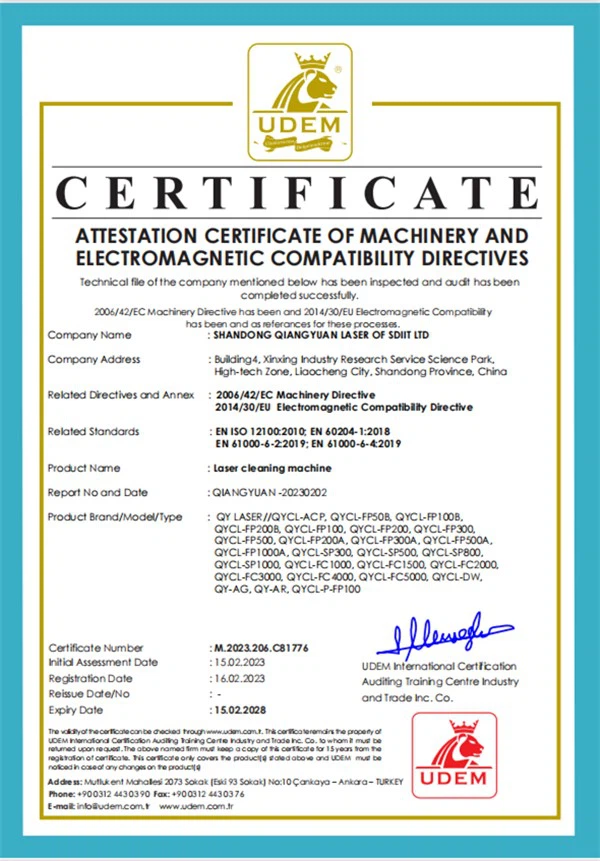
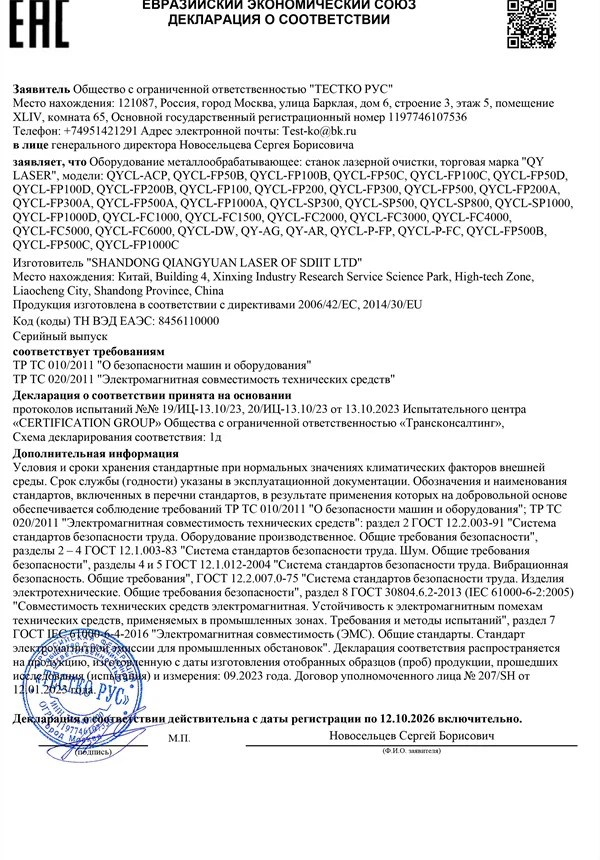
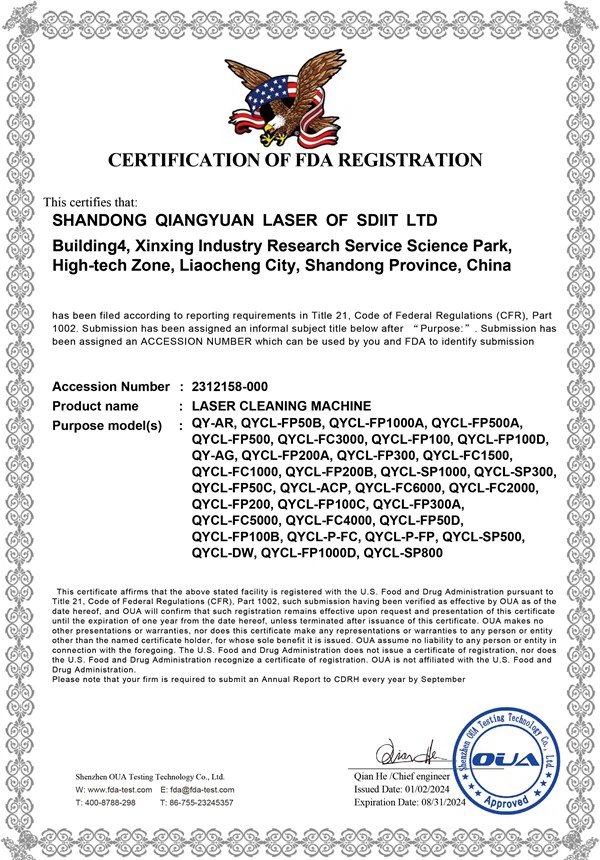
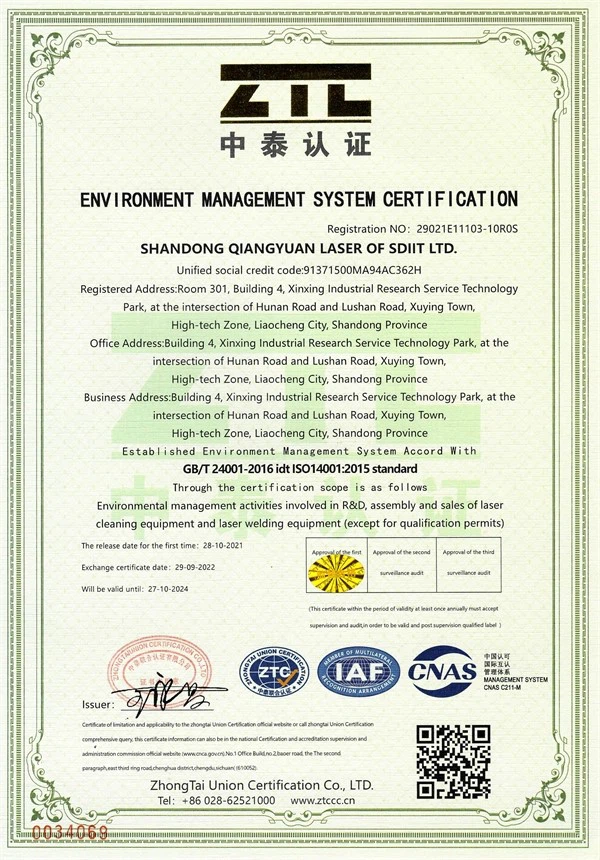
SDQY Laser has passed ISO9001, ISO14001, ISO45001, CE, EAC, FDA, SGS and other certifications.


Customization Requirements

Provide personalized services in terms of solutions, appearance design, etc. based on customers' specific needs and preferences.

What is Laser Source?


A laser source is a device that generates coherent light, which means that the light waves have the same frequency, phase, and polarization. Coherent light has many advantages for optical communication, such as high intensity, narrow bandwidth, and low divergence. A laser source can be either continuous-wave (CW) or pulsed, depending on the modulation scheme and the data rate. Some common types of laser sources are semiconductor lasers, fiber lasers, and solid-state lasers.


The wavelength determines the compatibility with the optical fiber and the detector, as well as the attenuation and dispersion effects. The output power affects the signal-to-noise ratio and the transmission distance.

Benefits of Laser Source


Good Monochromaticity
The wavelength distribution range of the light emitted by the laser is narrow, so the color is extremely pure. The monochromaticity of the Laser Source is much stronger than other monochromatic light sources.


Good Monochromaticity Can Facilitate Filtering And Improve The Signal-to-noise Ratio
In material processing, different materials have different absorption spectra, and the monochromaticity of the laser can well control the absorption depth and distribution, and can selectively and controllably process the material. Monochromatic light is much more convenient in optical design, without dispersion aberration, and the better the monochromaticity, the more stable the corresponding wavelength or frequency.


Strong Directionality
The beam emitted by the Laser Source is emitted in only one direction. Ordinary light sources are mostly scattered in all directions. If you want to make the light source converge to one part, you need to install auxiliary devices, such as the headlights of cars equipped with reflectors with focusing effects, so that the light is gathered and emitted in one direction.


Good Coherence
Laser Source Coherence indicates the degree to which light is easy to interfere with each other. If light is considered as a wave, the closer the band, the higher the coherence. For example, when different waves collide on the water surface, they may strengthen or cancel each other out. Similar to this phenomenon, the more random the waves, the weaker the interference.

Laser Source And Led Source
 

Optical signals begin at the source with lasers or LEDs transmitting light at the exact wavelength at which the fiber will carry it most efficiently. The source must be switched on and off rapidly and accurately enough to properly transmit the signals.


Lasers are more powerful and operate at faster speeds than LEDs, and they can also transmit light farther with fewer errors.


LEDs, on the other hand, are less expensive, more reliable, and easier to use than lasers. Lasers are primarily used in long-distance, high-speed transmission systems, but LEDs are fast enough and powerful enough for short-distance communications, including video communications.


Lasers and LEDs are both semiconductor devices that come in the form of tiny chips packaged in either TO-style cans that plug into printed circuit board or microlens packages, which focus the beam into the fiber.


LEDs used in fiber optics are made of materials that influence the wavelengths of light that are emitted. LEDs emitting in the window of 820 to 870 nm are usually gallium aluminum arsenide (GaAIAs).


Lasers provide stimulated emission rather than the simplex spontaneous emission of LEDs. The main difference between a LED and a laser is that the laser has an optical cavity required for lasing. This cavity is formed by cleaving the opposite end of the chip to form highly parallel, reflective, mirror like finishes.

CW Laser Source
 
Principle of a Laser Source
 

A laser source operates based on the principle of stimulated emission of radiation, which involves several key components and steps:

01/

Stimulated Emission

At the core of laser technology is the process of stimulated emission. When an atom or molecule in an excited state is hit by a photon (a particle of light) with a specific energy level, it can release an additional photon of the same energy level, phase, and direction. This release is called stimulated emission.

02/

Energy Source (Pump)

To initiate and maintain the process, an external energy source, known as the pump, is used to excite the atoms or molecules in the laser medium. This excitation increases the number of atoms or molecules in an excited state, making them ready to emit photons.

03/

Laser Medium

The laser medium is a substance (solid, liquid, or gas) that contains atoms or molecules that can be excited to higher energy levels. The choice of medium determines the wavelength and color of the laser light. Common examples include ruby (solid), helium-neon (gas), and dye solutions (liquid).

04/

Optical Cavity

The laser medium is placed between two mirrors, forming an optical cavity. One mirror is highly reflective, while the other is partially reflective. This setup allows photons to bounce back and forth between the mirrors, stimulating more emissions and amplifying the light.

05/

Emission of Laser Light

As photons travel through the laser medium, they stimulate the emission of more photons, creating a coherent and monochromatic light beam. The partially reflective mirror allows some of this light to escape as a concentrated, coherent laser beam.

06/

Laser Beam Characteristics

The resulting laser beam is characterized by its coherence (the light waves are in phase), monochromaticity (the light is of a single color or wavelength), and directionality (the beam is narrow and well-defined).

 
Type of Laser Source
 

Solid-State Lasers
Solid-state lasers, such as YAG and YVO4 lasers, use solid crystals like YAG (Yttrium Aluminum Garnet) and YVO4 (Yttrium Vanadate) as the laser medium. These lasers generate light through the excitation of these solid-state crystals. YAG lasers, often used with a side-pumping method, involve positioning laser diodes parallel to the axis of the YAG crystal. The setup includes mirrors forming a resonator and a Q-switch to control the laser output. These lasers are commonly employed for applications like metal marking, cutting, engraving, and welding.


Gas Lasers (CO2 Lasers)
CO2 lasers utilize CO2 gas as the medium within a discharge tube. Electrodes in the tube create a high-frequency electrical discharge, generating a plasma state within the gas. This excitation leads to the CO2 molecules transitioning to an excited state, resulting in stimulated emission of radiation. CO2 lasers are renowned for their efficiency and are widely used in cutting and engraving applications due to their ability to produce high-intensity, coherent beams.


Semiconductor Lasers
Semiconductor lasers use a layered semiconductor structure to create a laser. The active layer, composed of different semiconductor materials, generates light when current is applied. This light is amplified between mirrors and is emitted as a laser beam. Semiconductor lasers are compact and efficient, making them suitable for applications requiring precision and small size, such as in communication devices and laser pointers.


Fiber Lasers
Fiber lasers represent a significant advancement in laser technology, utilizing optical fibers as the laser medium. These lasers are derived from developments in long-distance communication amplification. The fiber comprises a core surrounded by concentric metal cladding layers. Fiber lasers use seed light from a laser diode and amplify it through multiple fiber amplifiers. This setup allows for high power output with low thermal load and high efficiency. Fiber lasers are increasingly popular for their superior beam quality and lower power consumption compared to solid-state and gas lasers.


Application of Laser Source


CW Laser Source

Laser source communication
Using Laser Source for carrier communication, due to its strong anti-interference ability, it has high transmission bandwidth, large capacity and long distance;


Laser source medicine
It can play a variety of roles such as drill, scalpel, and welding gun, or Laser Source surgical treatment, non-surgical treatment with weak Laser Source biostimulation, and Laser Source photodynamic treatment.


Laser source ranging
Laser Source ranging uses a Laser Source as a light source to measure distance. Compared with the photoelectric range finder, it can not only operate day and night, but also improve the distance measurement accuracy, significantly reduce the weight and power consumption, and make it a reality to measure the distance to distant targets such as artificial earth satellites and the moon.


Laser source processing
Including cutting, welding, surface treatment, drilling, marking, marking, fine-tuning and other processing techniques.


Compact disc
Can be used to store various information and sounds. Video discs can store and reproduce images and videos, while computer-assisted and flexible optical discs can contain a full range of information, from words and music to television footage of images and action.

Use Laser Source to Check


Laser sources can operate at different wavelengths, which allows them to be used for various applications including cutting, ablating, and imaging tissues.


The coherence of laser light enables it to produce high-resolution images in optical imaging techniques, making it superior to conventional light sources.


Different types of lasers, such as semiconductor lasers and solid-state lasers, offer distinct advantages depending on their specific application in medical procedures.


Laser sources can be used in minimally invasive surgeries due to their precision and ability to target specific tissues without damaging surrounding areas.


Safety precautions are crucial when using laser sources, as the concentrated beam can cause burns or damage to eyes if not handled properly.

 
How to Maintain the Laser Welding Machine's Laser Source
 

Clean the Lens
The lens of the laser source should be cleaned regularly to avoid contamination that can affect beam quality. Use a soft, lint-free cloth and appropriate lens cleaning solution. Avoid using abrasive materials that could scratch the lens.


Inspect for Dust and Debris
Check for any dust or debris around the laser source and remove it using a gentle air blower. Accumulation of dust can obstruct the laser path and impact performance.


Cooling System Maintenance
Ensure that the coolant levels in the laser source’s cooling system are adequate. Low coolant levels can lead to overheating and potential damage.


Maintain Optimal Temperature
Keep the laser source within its specified temperature range. Excessive heat can degrade performance and shorten the lifespan of the laser.


Check for Voltage Fluctuations
Ensure that the power supply is stable and within the required voltage range. Voltage fluctuations can affect the laser’s operation and cause malfunction.


Calibrate Beam Alignment
Regularly check and calibrate the beam alignment to ensure accurate welding. Misalignment can lead to defects in welds and decreased efficiency.


Verify Power Output
Periodically measure the laser’s power output and adjust if necessary. Consistent power output is essential for high-quality welding results.


Inspect and Replace Mirrors
The mirrors in the laser source should be inspected for signs of wear or damage. Replace any mirrors that are scratched or deteriorated to maintain optimal beam quality.


Check and Replace Filters
Replace any filters in the laser source’s air or coolant systems that have become clogged or damaged.


Record Maintenance Actions
Keep detailed records of all maintenance activities, including cleaning, calibration, and parts replacement. This documentation can help track performance trends and identify potential issues early.


Schedule Regular Inspections
Set up a maintenance schedule to ensure that all checks and servicing are performed regularly. Regular inspections can prevent unexpected breakdowns and extend the lifespan of the laser source.

 
Our Factory

SDQY Laser is a State-level High-tech Enterprise, Innovative Enterprises in Shandong Province, Advanced Laser Technology Innovation Center, Liaocheng New Research and Development Institution.


Our products has exported to European, American, Middle Eastern, Australian, African countries and regions, we provided customers with high quality laser solutions.

productcate-324-243
productcate-1-1
productcate-1-1
productcate-1-1
 
Certificate


productcate-1-1
productcate-1-1
productcate-1-1
productcate-1-1
FAQ

Q: What is the difference between laser source and light source?

A: A laser generates a beam of very intense light. The major difference between laser light and light generated by white light sources (such as a light bulb) is that laser light is monochromatic, directional and coherent. Monochromatic means that all of the light produced by the laser is of a single wavelength.

Q: What is the laser source for laser welding?

A: Gas laser welding uses carbon dioxide (CO2) or other gases to produce light. Solid-state laser welding uses ores such as yttrium, aluminum, and garnet (as with YAG laser welding) to produce light.

Q: What laser source is used in lidar?

A: Traditionally, high pulse energy lasers, one outputting 1064 nm and one with 532 nm are used for this application. LIDAR Lasers: LIDAR laser sources are the key component within LIDAR systems, the optical analog to traditional radar.

Q: What are laser sources of radiation?

A: A laser (LASER = Light Amplification by Stimulated Emission of Radiation) is a monochromatic source of radiation that emits one specific frequency or wavelength of radiation. Because lasers put out a specific frequency of radiation, they cannot be used as a source to obtain an absorbance spectrum.

Q: What is the use of laser source?

A: The demonstrated laser sources are preferred in applications such as laser surgery, spectroscopy, laser pumping, optical sensing and detection. Nevertheless, there are still many problems to solve in the development of high-performance fiber laser sources operating at 1.7 μm.

Q: What is the construction of laser source?

A: A laser is constructed from three principal parts: An energy source (usually referred to as the pump or pump source), A gain medium or laser medium, and. Two or more mirrors that form an optical resonator.

Q: What are the main advantages of a laser in comparison to a regular light source?

A: Because lasers give off less heat than fluorescent bulbs (which means there's less stress on the other parts), they last longer without needing repairs or maintenance work done. They also use less power than traditional lamps because no filament inside can burn out very easily (making them super energy efficient).

Q: What are the advantages of laser source?

A: Lasers are able to produce high energy concentrations because of their monochromatic, coherent, and low divergence properties compared to an ordinary light source. As a result, they can be used to heat, melt, and vaporize most materials.

Q: What is the function of the laser source?

A: A wide variety of laser sources have been used to promote reaction within and desorption of molecules from condensed films. These span a wide wavelength range, reaching from the VUV to the far IR allowing a variety of excitations to be probed including electronic transitions and molecular vibrations.

Q: What are laser sources of radiation?

A: A laser (LASER = Light Amplification by Stimulated Emission of Radiation) is a monochromatic source of radiation that emits one specific frequency or wavelength of radiation. Because lasers put out a specific frequency of radiation, they cannot be used as a source to obtain an absorbance spectrum.

Q: What is a Laser Source?

A: A laser source is a device that emits a beam of light through the process of optical amplification based on the stimulated emission of photons. The light emitted is coherent, meaning that the photons are all in phase, and it is monochromatic and highly directional.

Q: How Does a Laser Source Work?

A: A laser source operates by exciting electrons to a higher energy state within a gain medium. When the electrons return to their ground state, they emit photons. This process is amplified through a feedback mechanism provided by mirrors, creating a concentrated and powerful beam of light.

Q: What is the Role of the Gain Medium in a Laser Source?

A: The gain medium, also known as the active medium, is the material that amplifies the light. It is the heart of the laser source, where the light is generated and amplified through the stimulated emission of photons.

Q: What is the Importance of Wavelength in Laser Sources?

A: The wavelength of the laser determines its interaction with materials. Different wavelengths are suitable for different applications, such as cutting, welding, marking, or medical treatments, based on their absorption by specific materials.

Q: What are the Advantages of Fiber Lasers Over Other Types?

A: Fiber lasers offer high efficiency, compact size, low maintenance, and excellent beam quality. They are also versatile and can operate in a wide range of power levels, making them suitable for various industrial and medical applications.

Q: Can Laser Sources Be Used in Extreme Environments?

A: Yes, certain laser sources are designed to operate in extreme environments, including very high or low temperatures, high humidity, and in the presence of corrosive materials. They are often used in aerospace, military, and industrial settings.

We're well-known as one of the leading laser source manufacturers and suppliers in China. Please rest assured to buy high quality laser source at competitive price from our factory. For customized service, contact us now.

Laser Protective Lens, Wire Feeder For Welding Machine, CW Laser Cleaning Head

(0/10)

clearall