Laser Cutting Machine

Company Profile


Shandong Qiangyuan Laser of SDIIT Ltd. (SDQY Laser) founded by Laser Institute of Shandong Academy of Science since 1978. A leading enterprise focusing on the R&D, manufacturing, sales and service of laser cleaning, welding, cutting, cladding machines and solutions.


SDQY Laser has a multi-disciplinary doctoral innovation team composed of optical, mechanical, electronic, computer, materials science and other specialties.

Why Choose Us

Professional Team

The company relies on the Laser Research Institute of Shandong Academy of Sciences and has a multi-disciplinary high-level R&D and innovation team in optics, mechanics, electronics, etc.

Complete After-Sale Service

Our after-sales service team have professional skills and knowledge, and can provide accurate and effective solutions in installation guidance, usage training, parts replacement, regular maintenance, etc.

Safety Assurance

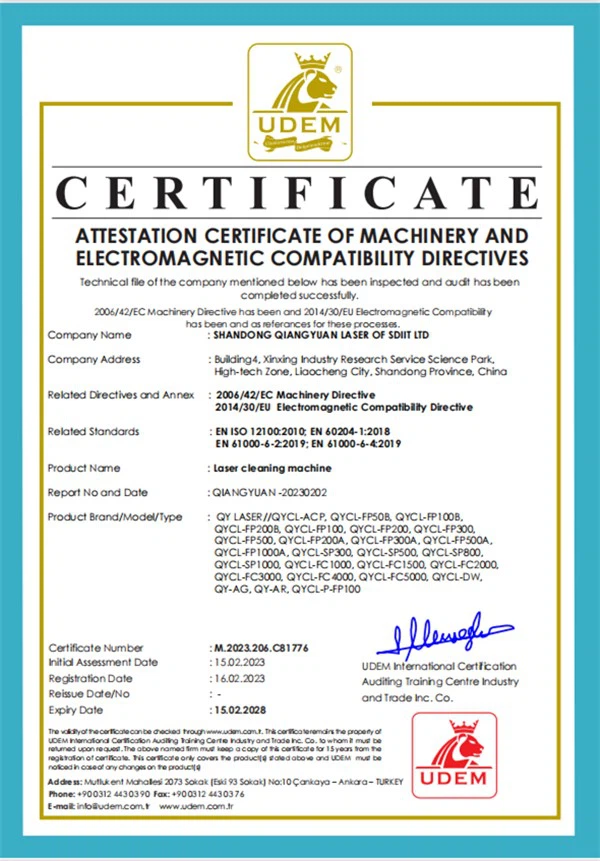
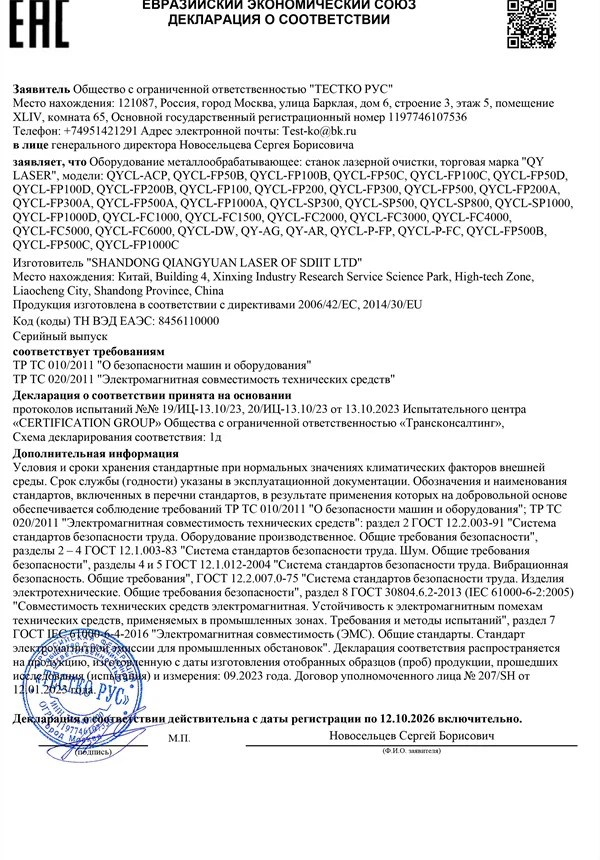
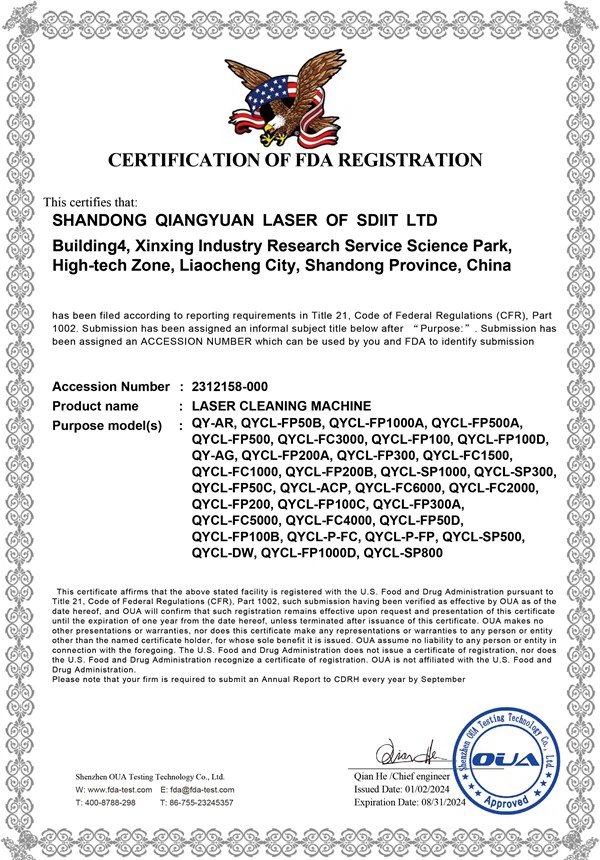
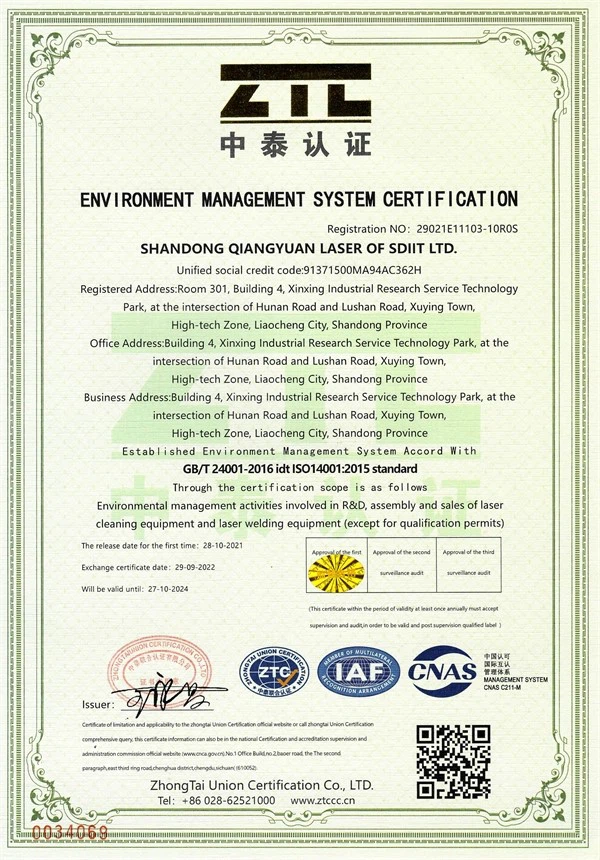
SDQY Laser has passed ISO9001, ISO14001, ISO45001, CE, EAC, FDA, SGS and other certifications.


Customization Requirements

Provide personalized services in terms of solutions, appearance design, etc. based on customers' specific needs and preferences.

What is Laser Cutting Machine


The laser cutting machine emits a high powered laser beam to either cleanly cut or etch a specific design on materials such as steel, plastic or wood. It is generally used more for industrial manufacturing applications and the beam will either burn, vaporise or melt away the excess product, leaving a superior finished design or edge.


A laser cutting machine has settings known as the computer numerical control (CNC), as well as laser optics, which control and direct the laser beam’s intensity for the desired design effect, or the specific cuts required in a manufacturing or design project. The laser beam is generated by a process whereby electrical discharges or a lamp trigger a lasing material within a confined container causing a chemical reaction, resulting in a high powered beam being released.

Benefits of Laser Cutting Machine


Noncontact Process
Laser cutting machines cut the fabric precisely without touching it, which means there is no contamination in the garment.The beam of a laser cutter does not physically touch the material, but USES its heat to cut the material, thus minimizing the cost of the material.Laser cutting provides the precision as if it were done by hand, but is much faster, which makes it more practical and allows for lower price points.


Low Power Consumption
This is an important advantage in a company that is seeking smarter work rather than trying harder to increase production while reducing costs.A cutting machine will only use about 10 kW of power, while other cutting processes use a more 50 kW mark.


A Safer Way
As production increases, so does safety.Laser cutting has high cutting efficiency and high precision for materials.Precise, clean cutting, sealed fabric edges and anti-wear techniques have become very popular in the fashion industry.


Cutting Different Materials
The high-tech machine is used to cut various materials such as silk, nylon, leather, neoprene, polyester and cotton.In addition, the cutting is done without any pressure on the fabric, which means that no part of the cutting process requires anything other than a laser machine to touch the garment.No unexpected marks were left on the fabric, which favored delicate fabrics such as silk and lace.

 
Type of Laser Cutting Machine
 

PCB laser cutting machine
PCB laser cutting machine: Adopt high-performance green/purple laser, with good beam quality, small focus spot and uniform power distribution, and can process various high complexity circuit boards, flexible circuit boards and soft and hard combination boards.
By reducing the power by pulse, PCB two-dimensional code printing can be carried out to realize cutting and code printing with one machine for two purposes.


Pipe laser cutting machine
Laser metal pipe cutting machine: Applicable to the one-time cutting and forming of round tubes, square tubes and special-shaped tubes.
It adopts a reciprocating feeding system, which is not limited to the length of the tubes, and has a high degree of automation.
It directly imports three-dimensional graphics, automatically identifies the cutting path, and carries out precision high-speed processing.
The machine is equipped with a fully automatic loading system, which can be selected according to customer requirements.


Large-scale gantry optical fiber laser cutting machine
Laser cutting machine is to use the focused high-energy pulse laser with auxiliary blowing to partially melt and vaporize metal workpiece, so as to achieve the purpose of accurate cutting.
The cutting speed is 60 times faster than that of wire cutting;
The heat-affected zone is small, the workpiece to be processed is not easy to deform, and the cutting seam is smooth and smooth, without subsequent treatment;
It can process multiple beams and multiple stations simultaneously (optional function).


Precise laser cutting machine for precious metal
Precise cutting machine of precious metal adopts the original double-layer precious metal recovery system.
Imported fiber laser, high configuration cutting head, high precision rotary servo motor, professional laser cutting control software, and automatic following focusing system, which can automatically follow the bending fluctuation of the workpiece to adjust the focus position during cutting to ensure the quality of precision cutting.


Flexible circuit board laser cutting machine
Flexible circuit board laser cutting machine: Combines laser technology, visual positioning technology and electronic technology, and adopts high-performance ultraviolet laser.
It has the characteristics of advanced automatic manufacturing such as high beam quality, high peak power, high accuracy, high stability, high efficiency and high flexibility.
It can cut and process all kinds of flexible circuit boards with high precision and high complexity, and can be applied to the processing of auxiliary materials of flexible circuit boards.


What Materials Are Used for Laser Cutting Machine?
 
01/

Metals
Metals, with their durability and strength, are a popular choice for laser cutting. They require a laser cutters with higher power settings but offer precision and clean cuts for a variety of applications ranging from industrial components to intricate art pieces.

02/

Mild Steel (Carbon Steel)
Mild steel, or carbon steel, combines strength with ease of cutting, making it a preferred material for automotive parts, construction beams, and artistic creations. It’s the go-to for projects requiring structural integrity and durability.

03/

Stainless Steel
Stainless steel, known for its corrosion resistance and strength, is a favored material in laser cutting for producing durable industrial parts, art, and decorative items. Its ability to withstand harsh environments makes it ideal for outdoor applications, while its aesthetic appeal is perfect for artistic and decorative uses.

04/

Brass
Brass, an alloy of copper and zinc, boasts not only a visually appealing golden hue but also excellent conductivity, making it a preferred material for decorative items, plaques, and various components in the electronics industry. The aesthetic qualities of brass lend a touch of elegance to decorative pieces, while its conductivity ensures efficiency in electronic applications, from connectors to sensors.

05/

Aluminum
Aluminum, known for its remarkable lightness and resistance to corrosion, emerges as a top choice in laser cutting for industries where weight and durability are critical factors. Its lightweight nature, combined with significant strength, makes aluminum an indispensable material in aeronautics and automotive manufacturing. The material’s ability to resist corrosion extends the life of parts and products, making it also popular for creating intricate artworks that withstand the test of time.

06/

Copper
Copper stands out for its superior conductivity and thermal properties, making it ideal for electrical components, decorative arts, and heat exchangers. Its high conductivity is critical for efficient energy transfer in electrical systems, while the warm, distinctive color of copper makes it a favorite among artists and designers. Additionally, copper’s thermal properties are leveraged in heat exchangers, contributing to systems that operate with greater energy efficiency.

 
Application of laser cutting machine in home appliance industry
 

Among the commonly used electrical products, laser cutting machines are mainly used for drilling metal parts, plastic parts, and metal parts of the shell of washing machines, refrigerators, air conditioners and other products (metal plate parts account for more than 30% of all parts), Cutting.
The traditional processes of blanking, cutting corners, opening and trimming are relatively backward, which directly affects product quality and production costs.


Other small home appliances, such as juicer blade cutting, microwave cutting, microwave cutting technology, and laser cutting can also be used.
In addition to the incomparable flexibility and processing accuracy of the traditional technology, the laser cutting machine can also achieve customized and personalized high-volume production.


With the intelligent development of the home appliance industry, in the electrical manufacturing process, the requirements for sheet metal parts and parts are becoming more and more refined, and the shape is complex, and the process is more difficult.


Laser cutting is a non-contact, high-speed, high-precision cutting method that focuses energy into a tiny space and uses high-density energy. Therefore, it has the characteristics of higher cutting accuracy, lower roughness, higher material utilization and production efficiency.


Laser cutting technology in the electrical industry does not effectively solve the drawbacks of traditional process processing. It can also improve the processing quality of the workpiece, save processing links and processing costs, shorten the product manufacturing cycle, reduce labor and processing costs, and thereby achieve large-scale Improve the processing efficiency and the production efficiency of the enterprise.

How Does A Laser Cutting Machine Work?
 

The laser beam is a column of very high intensity light, of a single wavelength, or color. In the case of a typical CO2 laser, that wavelength is in the Infra-Red part of the light spectrum, so it is invisible to the human eye. The beam is only about 3/4 of an inch in diameter as it travels from the laser resonator, which creates the beam, through the laser cutter's beam path. It may be bounced in different directions by a number of mirrors, or "beam benders", before it is finally focused onto the plate. The focused laser beam goes through the bore of a nozzle right before it hits the plate. Also flowing through that nozzle bore is a compressed gas, such as Oxygen or Nitrogen.


The high power density results in rapid heating, melting and partial or complete vaporizing of the material. When cutting mild steel, the heat of the laser beam is enough to start a typical "oxy-fuel" burning process, and the laser cutting gas will be pure oxygen, just like an oxy-fuel torch. When cutting stainless steel or aluminum, the laser beam simply melts the material, and high pressure nitrogen is used to blow the molten metal out of the kerf.


On a Laser Cutting Machine, the laser cutting head is moved over the metal plate in the shape of the desired part, thus cutting the part out of the plate. A capacitive height control system maintains a very accurate distance between the end of the nozzle and the plate that is being cut. This distance is important, because it determines where the focal point is relative to the surface of the plate. The cut quality can be affected by raising or lowering the focal point from just above the surface of the plate, at the surface, or just below the surface.

Sheet Laser Cutting Machine


Plate Tube Integrated Laser Cutting Machine

A laser cutting machine works by focussing a beam of laser light onto a piece of material. The laser light is so high powered, that when focused, it raises the temperature of the material to be cut high enough to melt or vaporize the material, in the small area the beam is focused. Often, an assist gas is used to help push the molten material from the cut area. This is especially true for cutting metals or thick sheets of material like plywood.


To cut shapes, the laser head is moved, using some form of gantry to position the beam over new material, causing a line to be cut instead of a small pinhole. The types of motion systems include rack and pinions, ball screws, and linear motors. Linear motors are most expensive, but are fastest and most accurate. Rack and pinions provide nearly the same speed and accuracy, but for a lower price. Some small hobbyist lasers might also use timing belt and stepper motors to move their laser head. In all cases, a system with serves, and encoder feedback adds greatly to the accuracy of Laser Cutting System, as does a rigid frame, isolated from vibration.

Maintenance Tips for Laser Cutting Machines


Frequent Cleaning Of Machine Components
In addition to the importance of keeping the work area free of dust, to prevent it from entering the equipment and impairing the cut, it is also important to keep other components clean such as linear guides, motors or racks. In order to keep them functioning properly, it is important to keep them free from rubbish or metallic dust and, if necessary, properly lubricated.


Cleaning The Different Components Of The Cutting Head
Before any intervention on the cutting head components, it is important to carefully clean the head with a soft cloth and clean the surrounding area to prevent the entry of garbage.
In order to guarantee the precision of the cut, the ceramic ring and nozzle must be replaced daily. If the nozzle is damaged by the laser beam or after a collision, it must be promptly replaced.


Cleaning The Filter
Clean the dust collection baskets daily. In case of intensive use of the filter, the baskets should be cleaned several times during the day. The cleaning cycles of the dust collection baskets are defined by the operator according to the machine's workload.


Scheduling Periodic Preventive Maintenance With Certified Entities
Given the technical strength of the components of laser cutting machines, it is always important to maintain a schedule of preventive maintenance, with a certified entity. These maintenance should be used to check other essential points that, due to their technical component, cannot be verified by the equipment operator.

 
Our Factory

SDQY Laser is a State-level High-tech Enterprise, Innovative Enterprises in Shandong Province, Advanced Laser Technology Innovation Center, Liaocheng New Research and Development Institution.


Our products has exported to European, American, Middle Eastern, Australian, African countries and regions, we provided customers with high quality laser solutions.

productcate-324-243
productcate-1-1
productcate-1-1
productcate-1-1
 
Certificate


productcate-1-1
productcate-1-1
productcate-1-1
productcate-1-1
FAQ

Q: What is a laser cutting machine used for?

A: A laser cutter is a prototyping and manufacturing tool used primarily by engineers, designers, and artists to cut and etch into flat material. Laser cutters use a thin, focused laser beam to pierce and cut through materials to cut out patterns and geometries specified by designers.

Q: What is the process of laser cutting?

A: Laser cutting is a slitting process with which it is possible to cut metallic and non-metallic raw materials of different material thicknesses. This is based around a laser beam which is guided, formed, and bundled. When it hits the workpiece, the material heats up to the extent that it melts or vaporises.

Q: How long does laser cutting take?

A: You might wonder how long it takes to laser engrave VS how long it takes to laser cut. While that is dependent on your machine, on my 60W it took roughly 4 minutes to engrave VS 2 minutes to cut.

Q: How much is laser cutting?

A: Production time for laser cutting and engraving costs £1 per minute. A job that takes 30 minutes will cost £30 + materials + artwork set up. If it takes a hour, production time would be £60. For larger jobs, there can be a discount depending on the intensity and complexity of the job.

Q: What is better than laser cutting?

A: If you need high speed and precision on thinner materials, laser cutting is the way to go. If you need precision and the ability to cold cut (and don't mind getting a little wet), waterjet cutting is ideal.

Q: What files are needed for laser cutting?

A: The DXF (Drawing Exchange Format or Drawing Interchange Format) file format is one of the two most common formats used in laser cutting. DXF uses vectors, which can be read by laser-cutting machines and turned into cutting instructions.

Q: Can you leave a laser cutter unattended?

A: Never leave an operating laser cutter unattended. Avoid placing the laser cutter on wood and other combustible surfaces. Know how setting the pulse rate of the laser affects the chance of a fire and the resolution of the cut.

Q: Is there money in laser cutting?

A: You can absolutely make money with a laser engraving business. In fact, any laser engraver owner who is not making money with their laser machine is probably not trying to. The advantage of the laser engraver cutter is that it can turn low-cost items into valuable products quickly, accurately, and easily.

Q: What is the life of a laser cutting machine?

A: Typically, the lifespan of these laser cutters is 10,000 to 15,000 hours. After that period, the pump diodes must be replaced so the laser cutter can work. The laser tube, power supply, and motherboard are three critical components that might fail.

Q: What is required for laser cutting machine?

A: To sum up, laser cutting machines have many requirements for the working environment, including a stable power supply, good light and temperature conditions, a clean environment, and complete safety protection measures.

Q: Is laser cutting machine a CNC machine?

A: Computer Numeric Controlled (CNC) Laser cutting machines work on the principle that a focused high-power laser beam is used to cut, inscribe, or engrave a metal surface to get the desired shapes. They are specially used to cut intricate shapes and minute holes with a high level of accuracy.

Q: What is a Laser Cutting Machine?

A: A laser cutting machine is a device that uses a laser beam to cut through various materials such as metal, wood, glass, and plastics with high precision and efficiency.

Q: How Does a Laser Cutting Machine Work?

A: The machine focuses a high-powered laser beam onto the material. The beam melts, burns, or vaporizes the material along a specified path, guided by computer software to create accurate cuts.

Q: What Types of Lasers are Used in Laser Cutting Machines?

A: Common types include CO₂ lasers for cutting non-metallic materials, and Nd:YAG and fiber lasers for metals. Each type has its own wavelength and power characteristics, suited to different materials and thicknesses.

We're well-known as one of the leading laser cutting machine manufacturers and suppliers in China. Please rest assured to buy high quality laser cutting machine at competitive price from our factory. For customized service, contact us now.

100W Pulse Fiber Laser Cleaning Machine, 2000W Laser Cleaning Machine, Cultural Relics non destructive Laser Cleaning

(0/10)

clearall