Laser Welding Machine

Company Profile


Shandong Qiangyuan Laser of SDIIT Ltd. (SDQY Laser) founded by Laser Institute of Shandong Academy of Science since 1978. A leading enterprise focusing on the R&D, manufacturing, sales and service of laser cleaning, welding, cutting, cladding machines and solutions.


SDQY Laser has a multi-disciplinary doctoral innovation team composed of optical, mechanical, electronic, computer, materials science and other specialties.

Why Choose Us

Professional Team

The company relies on the Laser Research Institute of Shandong Academy of Sciences and has a multi-disciplinary high-level R&D and innovation team in optics, mechanics, electronics, etc.

Complete After-Sale Service

Our after-sales service team have professional skills and knowledge, and can provide accurate and effective solutions in installation guidance, usage training, parts replacement, regular maintenance, etc.

Safety Assurance

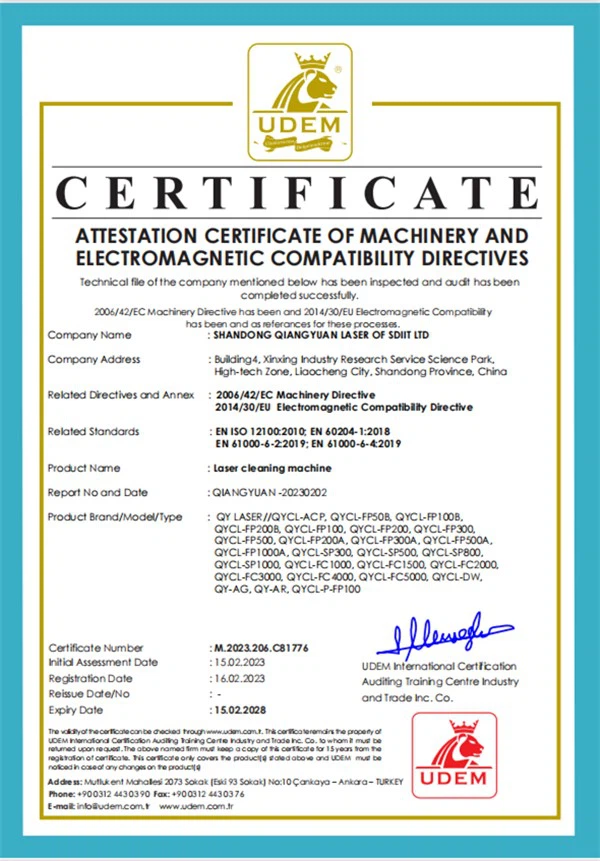
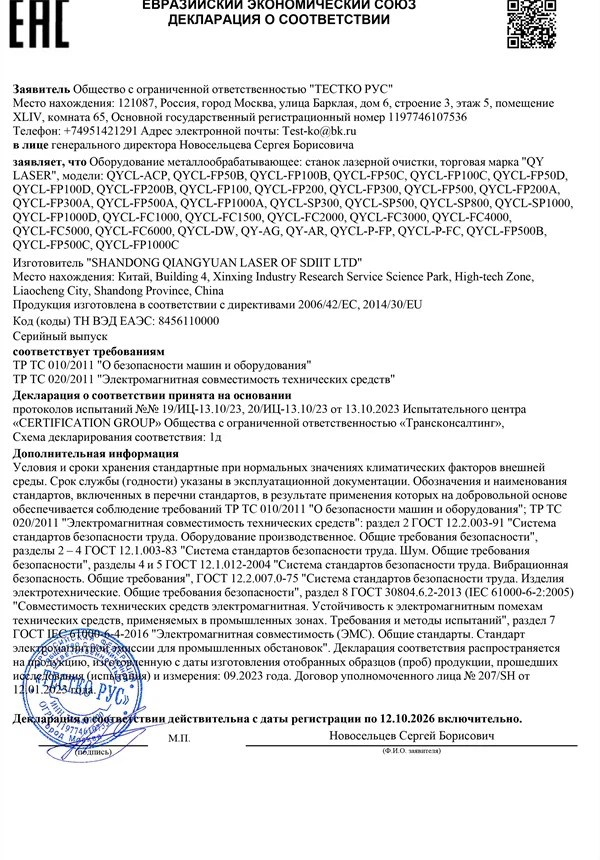
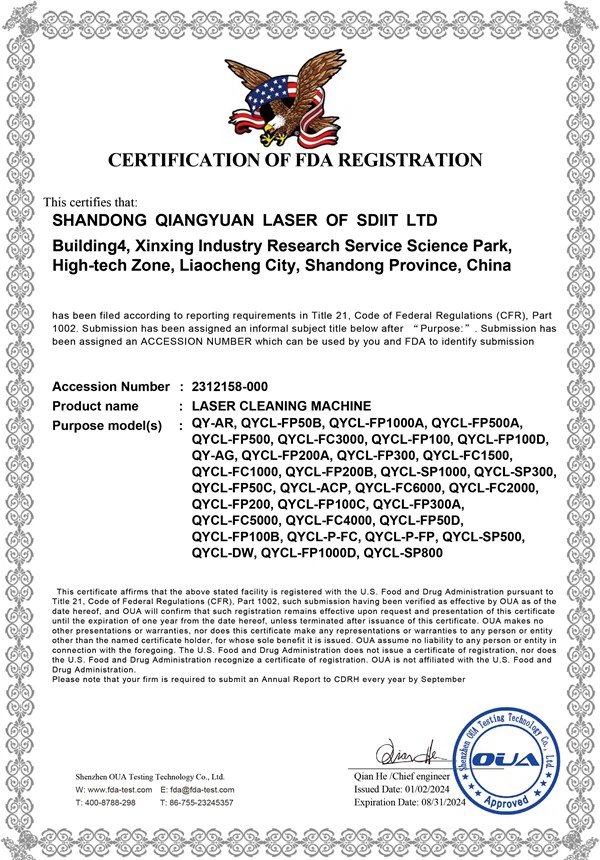
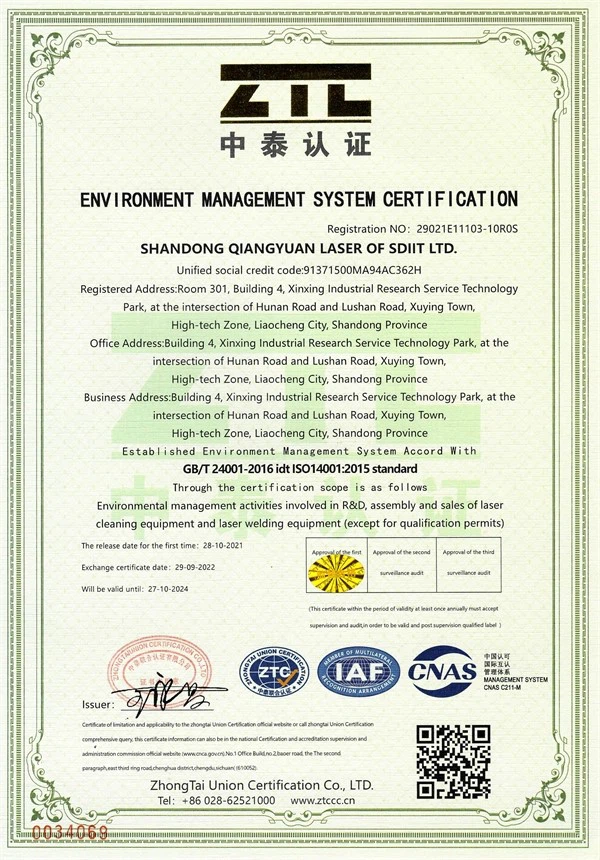
SDQY Laser has passed ISO9001, ISO14001, ISO45001, CE, EAC, FDA, SGS and other certifications.


Customization Requirements

Provide personalized services in terms of solutions, appearance design, etc. based on customers' specific needs and preferences.

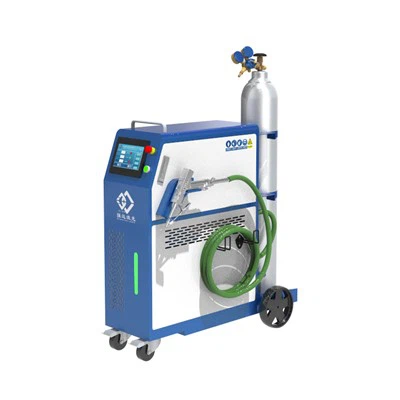
What isLaser Welding Machine?


Laser Welding Machine is a critical process used to join materials permanently, but traditional Laser Welding Machine methods can be time-consuming, imprecise, and lead to deformities. Contrarily, the accuracy, speed, and efficiency of laser Laser Welding Machine have transformed the Laser Welding Machine industry.


Several industries use laser Laser Welding Machine, including automotive, aerospace, and medical. The joining of materials of various types and thicknesses uses potent and cutting-edge laser Laser Welding Machine technology.


Laser Welding Machine are used in laser Laser Welding Machine to melt and fuse various materials, creating a solid, high-quality connection.

Advantages of Laser Welding Machine
 

Higher Accuracy
Laser Welding Machine produces a very narrow laser beam that can be focused very precisely on the area to be welded, even in areas as small as millimeters in diameter. In addition to more precise control of the welding process, it also avoids wastage and errors of welding material and ensures consistent quality.


High-Quality Welds
One of the main advantages of Laser Welding Machine is that it produces higher-quality welds. That’s because Laser Welding Machine creates a narrower and deeper weld than other methods, creating a stronger bond between the two pieces of metal and can withstand extreme temperatures and harsh environments. The uniform pulse of Laser Welding Machine results in a very clean seam after Laser Welding Machine without the beading or burrs that are inevitable in gas-shielded or electric welding.


The Laser Increases Welding Speed
Laser Welding Machine is many times faster (up to 5 to 10 times faster) than traditional methods. Welding speeds vary depending on the type and power of the laser generator used. High welding speeds allow more parts to be produced per hour, which means faster turnaround times and higher productivity. Additionally, Laser Welding Machine can be integrated with automated equipment, which allows them to run for longer periods.


Versatility
Laser Welding Machine is extremely versatile, and different laser units are good at welding different kinds of things. For example, Laser Welding Machine can be performed on a variety of metal materials, including mild steel, stainless steel, and titanium. Laser Welding Machine can be used to weld thick steel plates used in the shipping industry, to weld precious metals used in jewelry, or to weld copper contacts on electric car batteries. It can reach hard-to-reach places, realize non-contact long-distance welding, and has great flexibility. Laser Welding Machine is very suitable for the assembly and welding of miniature and small workpieces produced in large quantities.

 
Types of Laser Welding Machine
Fiber Laser Welding

Fiber laser welding is a process of welding that uses fiber laser beams as a source of energy. It helps to combine the metal pieces. This method uses a focused laser beam that melts the material. It offers a concentrated heat source and welds the metals together.


Fiber laser welding machines create a robust weld, ensuring that the welded materials are precisely joined with a massive speed and high control. It is a suitable process for fusing thin materials that are delicate. Since this process comprises quick heating and cooling, the welding time is shorter than traditional welding methods. Since this laser welding has a high power density, the achievement of deep penetration laser welding is possible.

Keyhole Laser Welding

Keyhole welding is an advanced method that forms a narrow and deep hole in the workpiece while welding. The keyhole welding process uses a high-power laser beam so that an intense source is created to create a keyhole.


The keyhole passes through the thickness of the workpiece and allows deep penetration laser welding. During this process, the material of the workpiece is vaporized due to the vapor pressure, which helps keep the keyhole stable.


The keyhole welding process has multiple benefits, as it penetrates thick materials, and applications that need a fully penetrated weld may achieve them through this technique. The joints created by this process are of high-quality welds with minimal distortion.

Conduction Welding

Conduction laser welding is a process in which metal pieces are joint through heat conduction. The method of conduction welding is suitable for welding thin materials or materials with low heat conductivity.


A laser beam passes through the metal components at the joining point. The component absorbs the energy of the laser beam. The absorption of energy leads to heating; the molten material then spreads out and forms a weld.


Hot conduction welding uses low-powered lasers, and due to controlled heat conduction, the joint welds. It is a suitable process when it comes to delicate welding materials.

Deep Penetration Welding

Deep penetration laser welding is a method that, unlike traditional welding methods, uses high-power laser beams so that the workpiece can be welded in depth. Due to its high-energy laser beam, it is used to weld thick materials.


A focused laser beam of high power density is subjected to the joint between the metal workpieces to create deep welds; the laser energy’s intensity leads to the desired welding depth. The laser beam heats the material, then vaporizes and forms a cavity in the workpiece.


Deep penetration laser welding has many benefits compared to traditional welding processes. It allows the welding of thick materials in just one go, eliminating the need for multiple laser welds. Materials with a high melting point are commonly welded through deep penetration laser welding.

YAG Laser Welding

YAG laser welding is a form of welding that uses solid-state lasers known as neodymium-doped yttrium aluminum garnet lasers, which lead to joining metal components. This method is famous for its versatility as it welds various metals together.


YAG lasers offer precise control of the welding process and allow for attaining high-quality welds. The laser beam allows for deep penetration welding. This process is highly suitable for thick materials. YAG welding offers control of laser welders on the shape of the pulsed laser, duration, and power of the welding.

Applications of Laser Welders
 

Thus, the speed at which the process happens enables the rapid production of welded products. This technology has applications in an uncountable number of industries. Almost every manufacturing industry that makes use of metallic parts has a use for this kind of Laser Welding Machine Machine. Therefore, the application of laser Laser Welding Machine Machine is found at large in all types of metallic and non-metallic manufacturing industries that make use of Laser Welding Machine Machine of parts.


Jewelry Industry
Another important application of laser Laser Welding Machine Machine is found in the jewelry industry. When you have to make intricate and delicate parts of jewelry from two different materials that are to be weld together, then the best option for Laser Welding Machine Machine them together is the laser Laser Welding Machine Machine technology.

Laser Welding Machine 1000w 1500w 2000w 3000w


Air Cooling Laser Welding Machine 1000w 1200w 1500w 2000w

Auto-motive Industry
According to twi-global, almost 15% of all the manufacturing processes in the industry involve laser application in one way or another. CO2-type Laser Welding Machine Machine has a large application in the automotive industry. The major application of Laser Welding Machine Machine is found in the manufacturing of gears, transmission parts, power trains.
Laser Laser Welding Machine Machine has found large successes in the automotive industry primarily due to the speed of operation, accuracy, efficiency, and lower cost in the long run. You can find out more about the application of laser Laser Welding Machine Machine in the automotive industry here.


Medical Industry
If you start listing down the individual industries that make use of laser Laser Welding Machine Machine then you will run out of time and writing space and time but you will not run out of the industries that make use of laser Laser Welding Machine Machine. Similarly, the medical industry has a large application of laser Laser Welding Machine Machine methods.
The most number of applications of the laser Laser Welding Machine Machine technique in the medical industry is the Laser Welding Machine Machine of dissimilar metal Laser Welding Machine Machine. Medical aids are usually made up of different types of electronic parts that are further fitted with multiple semi-conductors.

How does Laser Welding Machine work?


The laser Laser Welding Machine technology works based on the principle of heat generation by the laser source. Sources of laser in the method also vary and different sources of lasers are suitable for different types of materials and their physical and chemical properties.


Thus, when the beam of high laser energy is focused on a spot of the metal sheet it creates the metal sheet to melt at the spot. The depth of the hole is managed by the various methods of Laser Welding Machine Machine and varies accordingly.


Laser Welding Machine Methods
There are multiple methods of laser Laser Welding Machine that are largely in use in various industries. Let’s discuss some of these laser Laser Welding Machine Machine techniques for you to get a better idea of the process of laser Laser Welding Machine Machine.


Direct Heating Method
The direct heating method uses thermal conduction from the source of heat. Subsequently, this results in the melting of the base material and ultimately making the weld with the other material.


Energy Transmission Method
In comparison, the energy transmission method is slightly different and makes use of an intermediate material that conducts the heat from the source to the weld. Usually, it is the absorbent ink that acts as the intermediary material for the transfer of energy.


Conduction/Penetration Mechanism
This mechanism works on medium energy and creates a deeper hole than the conduction method but is shallower than the penetration method.


Penetration or Keyhole Laser Welding Machine Machine Mechanism
The other way to weld by using a laser is by using the keyhole method. This method focuses the beam of the laser onto the material and creates deep penetration of heat. Thus, a hole is created on the spot by this method.
This hole is later filled with metal vapor that forms a bonding material with the other metal. Therefore, the resulting weld makes a great depth to width ratio and creates tight welds that are durable.

The Process of Laser Laser Welding Machine Machine

The process of laser Laser Welding Machine Machine involves several steps, including preparing the materials, focusing the laser beam, heating the materials, cooling, and finishing.


Preparing the Materials

The materials to be welded must be thoroughly cleaned and prepared before the Laser Welding Machine Machine process begins. Any contaminants on the surface can interfere with the Laser Welding Machine Machine process and result in a weak bond.


Focusing the Laser Beam

A lens or mirror directs the laser beam onto the material’s surface. The beam’s focal point must be exact to guarantee that the material is uniformly heated.

Heating the Materials

The laser beam is aimed at the material’s surface after being focused. The material is heated by the laser beam, which melts it and causes it to melt together to produce a weld.

Cooling

After Laser Welding Machine Machine, the material must be allowed to cool slowly to prevent any distortion or cracking.

Finishing

Once the material has cooled, the weld is inspected to ensure that it meets the required specifications. Any excess material or burrs are removed, and the surface is smoothed and polished if necessary.

 
Components Of Laser Welding Machine
 

Generally, standard Laser Welding Machine consists of the following essential components.

01/

Laser Source

This is a crucial component responsible for laser beam generation. Different laser sources include fiber, CO2, and Nd: YAG lasers.

02/

Workpiece Manipulation System

This system holds the workpiece steady, ensuring the beam creates the required specifications. It provides a stable and precise location for the welded workpiece.

03/

Cooling System

The cooling system maintains a stable temperature within the laser beam machine. It prevents the laser source and other components from damage due to the significant amount of heat that the laser generates.

04/

Beam Delivery System

It comprises mirrors and lenses that direct and concentrate the welding laser beam on the material. A typical beam delivery system is paired to a CNC system or fixed to a robotic arm.

05/

Safety Features

Welding materials together can be harmful when safety precautions are not in place. A laser beam welding system’s safety features include warning lights, interlocks, and shielding, which protects the operators and other personnel from the laser beam.

06/

Control and Monitoring Systems

These consist of software and hardware that manages the components of the laser beam system. These systems control and monitor different parameters, such as laser power and welding speed, during the welding operation.

 
How To Maintain The Laser Welding Machine?

Various industries have already taken action to regard automated laser welding machine technology as a strategic goal, and laser welding machines have become standard equipment for some high-end industrial production and processing enterprises. So, how should we maintain and maintain laser welding machines during their use?


Check The Optical Path Components Of The Laser Welding Machine.
To ensure that the laser welding machine’s laser is always in normal working condition, after continuous operation or when it is stopped for some time, the components in the optical path such as the YAG rod, dielectric film, and lens protection glass should be inspected before starting up, to ensure that each optical component is not contaminated. If there is any pollution, it should be promptly treated to ensure that each optical component will not be damaged under strong laser irradiation.


Check The Conductivity Of The Internal Circulating Water.
The purity of laser cooling technology for cooling water is the key to ensuring laser output efficiency and the lifespan of laser cavity components. During use, the conductivity of the internal circulating water should be checked weekly to ensure its conductivity. The deionized water in the internal circulation must be replaced once a month. Always pay attention to the color changes of the ion exchange column in the cooling system. Once the color of the resin in the exchange column becomes dark brown or even black, the resin should be replaced immediately.


Check And Adjust The Laser Resonator.
Equipment operators can frequently check the output spot of the laser using black imaging paper. Once any uneven or decreased energy spot is found, the resonant cavity of the laser should be adjusted promptly to ensure the quality of the laser output beam. Debugging operators must have common knowledge of laser safety protection and must wear specialized laser protective glasses during work. The adjustment of the laser must be carried out by specially trained personnel, otherwise, it may cause damage to other components on the optical path due to laser misalignment or bias adjustment.

 
Our Factory

SDQY Laser is a State-level High-tech Enterprise, Innovative Enterprises in Shandong Province, Advanced Laser Technology Innovation Center, Liaocheng New Research and Development Institution.


Our products has exported to European, American, Middle Eastern, Australian, African countries and regions, we provided customers with high quality laser solutions.

productcate-324-243
productcate-1-1
productcate-1-1
productcate-1-1
 
Certificate


productcate-1-1
productcate-1-1
productcate-1-1
productcate-1-1
FAQ

Q: What is the use of laser welding?

A: Laser welding offers high precision and speed, making it ideal for thin materials and complex joints with minimal thermal distortion. Laser welding can be used on a wide range of materials, including difficult-to-weld metals like aluminum and titanium, without the need for additional filler material.

Q: Are laser welding machines any good?

A: With a faster heating and cooling rate, handheld laser welders are better than traditional methods. As a result, they are more efficient and productive in terms of small-scale welding. However, in large-scale welding, traditional methods are more suitable due to the higher long life compared to laser welders.

Q: What is the difference between normal welding and laser welding?

A: Compared to traditional welding methods, laser welding has the following advantages: Less heat. In laser welding operations, the heat affected zone (HAZ) is much smaller and the total heat input is much lower than traditional welding operations. Lower risk of macro deflections and distortions.

Q: Can you weld aluminum with a laser welder?

A: Laser beam welding can be used with crack sensitive materials, such as the 6000 series of aluminum alloys when combined with an appropriate filler material such as 4032 or 4047 aluminum. There are several different types of lasers that work well with aluminum, and often the use of a cover gas is prudent.

Q: What is the problem with laser welding?

A: The high depth to width ratio of laser welds causes restraint and means that high thermal stress acts across the weld where the solidification fronts meet, causing centreline cracking.

Q: Can you weld cast iron with a laser welder?

A: Abstract. In the present investigation, laser-induction welding using oscillating beam guidance is employed to joint sheets of nodular grey cast iron, which typically exhibit poor weldability properties.

Q: What can you do with laser welding?

A: Laser welding can be used on any material that can melt and resolidify. This means that it is not only used to weld metals like aluminum, copper, and stainless steel, but also other types of materials, including certain types of thermoplastics, glasses, and composites.

Q: What is the best gas for laser welding?

A: Yes, Nitrogen (N2), Argon (Ar) and Helium (He) are all OK. But for materials easy to be oxidised, Argon is better. The gas can isolate the air from the welding plate to prevent reaction with the air. So the welding surface of the metal plate will be white and beautiful.

Q: What gas is used in laser welding?

A: CO2 (carbon dioxide) laser welding is the typical form of gas laser welding. In addition to CO2, other gases that can oscillate a laser include He/Ne (helium and neon) and Ar/Kr (argon and krypton). CO2, however, is the most commonly used medium for laser welding. A must-read for anyone involved in welding!

Q: How strong is laser welding?

A: Not only is laser welding typically stronger than MIG, it's three to ten times faster, welding relatively thick joints with ease, all without requiring multiple passes or high heat, which can diminish the strength of the welded materials.

Q: Is laser welding better than welding?

A: Laser welding is the most advanced type of welding. It offers high precision, low heat distortion, and faster processing time. This makes laser welding suitable for applications that require high precision. You must decide which welding method is right for you based on the application, type of project, and budget.

Q: Does laser welding need wire?

A: Laser beams are extremely precise, typically between one to three millimeters in diameter depending on the process. You need to lead wire directly into the spot without any deviation. Anything as little as . 1 millimeters off can potentially have negative effects on the quality of the weld.

Q: When to use laser welding?

A: Laser welding can be used on any material that can melt and resolidify. This means that it is not only used to weld metals like aluminum, copper, and stainless steel, but also other types of materials, including certain types of thermoplastics, glasses, and composites.

Q: Are laser welding machines any good?

A: With a faster heating and cooling rate, handheld laser welders are better than traditional methods. As a result, they are more efficient and productive in terms of small-scale welding. However, in large-scale welding, traditional methods are more suitable due to the higher long life compared to laser welders.

We're well-known as one of the leading laser welding manufacturers and suppliers in China. Please rest assured to buy high quality laser welding at competitive price from our factory. For customized service, contact us now.

2000W Laser Welding Machine, 1000w Laser Welding Machine, 1500W Laser Welding Machine

(0/10)

clearall