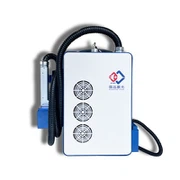

Parameters During Laser Cladding Process
Feb 23, 2024
High-speed laser cladding is a fast laser surface treatment technology. Its process features are good cladding quality, fast speed, low cost, and has certain market competitive advantages. Improper selection of high-speed laser cladding process parameters can lead to problems such as poor forming quality and easy deformation.
The key parameters involved in the high-speed laser cladding process are called processing parameters, which directly affect the laser cladding effect and forming quality. For example: laser power, spot shape, spot size, processing distance, etc., will all affect the morphology and quality of the cladding layer. The following mainly explains the eight processing parameters involved in the high-speed laser cladding process.


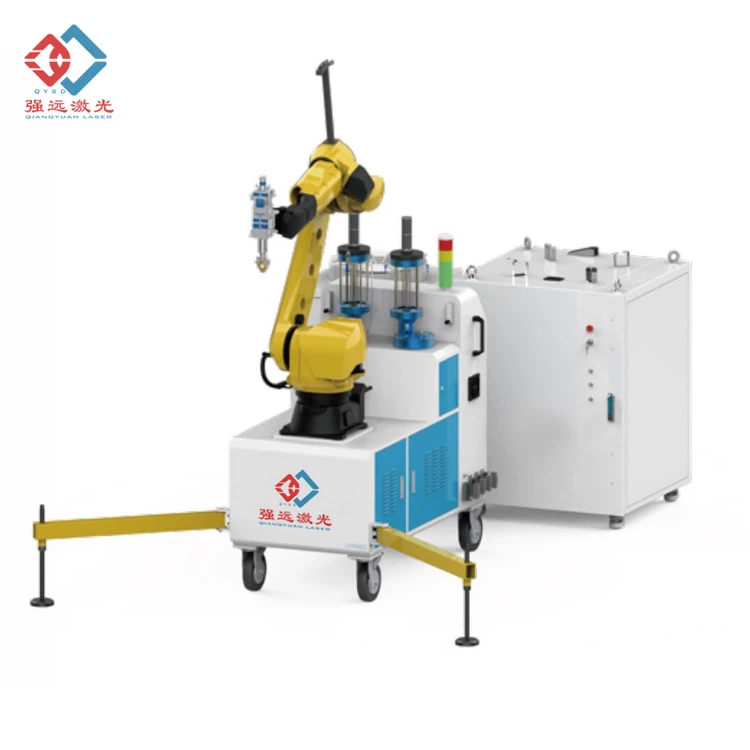


1. Laser power: the energy output by the laser per unit time. High-speed laser cladding generally uses KW-class lasers, such as LT-3KW, LT-4KW, etc., which are widely used in the market and can meet the needs of most fields.
2. Spot shape: The spot shape is an important factor affecting the quality of cladding. The spot shape is determined by the optical system of the laser. After the laser beam is emitted from the powder feeder, it passes through the scanning system and then onto the substrate, forming different spots at different locations. The spot shape directly affects the cladding effect and forming quality. Common light spot shapes are divided into circular and rectangular, and users can choose to use them according to the characteristics of the processing object.
3. Spot size: The spot size refers to the area of the substrate surface that the beam is scanned to. During the laser cladding process, the laser energy is first concentrated in the center of the cladding layer, and then radiates to the surroundings. The spot size mainly affects the optical power density, that is, the light energy per unit area. Under the same power conditions, the smaller the spot size, the greater the optical power density. High power density spots are suitable for high cladding. Melting point metal powder.
4. Processing distance: also called overlap rate, refers to the distance required for the laser beam to absorb heat from the molten pool during laser cladding. In the laser cladding process, the spot distance is an important factor affecting the cladding quality. In actual processing, when the spot distance changes within the range of 3-5 mm, the quality of the cladding layer is good, so the spot distance is generally controlled at 3-5 mm.
5. Overlap rate: The overlap rate refers to the overlap rate between the cladding metal powder and the substrate. The overlap rate is an important parameter that affects the surface roughness of the cladding layer. The greater the overlap ratio between the cladding material and the substrate, the easier it is to obtain a cladding layer surface with lower roughness.
When the spot diameter increases, the energy density of the laser beam increases, the molten pool becomes wider when heated, the melting speed accelerates, and more small holes are produced on the substrate.
The overlap rate is increased and the surface roughness of the cladding layer is reduced. However, it is difficult to ensure the uniformity of the overlapped part. The depth of the overlapping area between each cladding layer is different from the depth of the center of each cladding layer, thus affecting the entire cladding layer. The overlap rate of high-speed cladding is as high as 70%-80% (the overlap rate of ordinary cladding is 30%-50%).
6. Cladding speed: Both cladding line speed and cladding area rate can indicate cladding speed. In actual measurements, Rio Tinto's high-speed laser cladding line speed is 20m/min-50m/min, and when the cladding thickness is 0.2-0.6mm, the cladding efficiency is 0.6-1.2 square meters/hour.
7. Powder feeding method: The powder feeder in high-speed laser cladding is the key to ensuring the quality of laser cladding. The powder feeding methods of high-speed laser cladding mainly include ring powder feeding and center powder feeding. Center powder feeding has a higher powder utilization rate than annular powder feeding, but the design is difficult and requires a ring to surround the beam. Powder tube for one week. There are many circular powder feeding applications on the market today.
8. Protective gas pressure: During the high-speed laser cladding process, the matrix and the cladding material are easily oxidized. The oxides contained in the cladding material will cause the surface of the matrix material to become black, dark, and hard, seriously affecting the Workpiece surface quality. In order to avoid oxidation of the cladding material, the workpiece needs to be protected. High-speed laser cladding can be performed under a protective gas. Nitrogen or argon is generally used as the protective gas. It is mainly used to feed powder and form a protective area around the laser cladding pool to reduce oxidation.