
How To Choose The Right Power For Your Laser Cleaning Machine
Oct 06, 2025
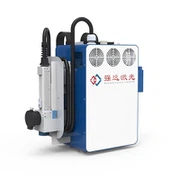
Portable laser cleaning machines are increasingly becoming the go-to solution in various industries, offering a highly efficient, precise, and eco-friendly alternative to traditional cleaning methods such as sandblasting or chemical cleaning. By using focused laser energy to evaporate rust, paint, oil, and other contaminants without physical contact, this technology minimizes surface damage and reduces the consumption of consumables and hazardous waste.
A key consideration for professionals when selecting a portable laser cleaner is determining the appropriate power level. Choosing a machine with insufficient power may lead to slow and incomplete cleaning, while an overly powerful system can result in unnecessary costs and energy consumption without delivering additional benefits.
To help users make an informed decision, we break down the power options and key selection criteria below.
Power Ranges & Typical Applications
- Low Power (50W,100W)
Ideal for light rust, thin paint layers, oxides, or adhesive residues on small or delicate components. These systems are well-suited for precision tasks involving electronics, precision machinery, or cultural artifact restoration.
- Medium Power (200W,300W,500W)
Balances versatility and speed, capable of handling thicker rust, heavy paint, and stubborn deposits on automotive parts, mold surfaces, structural steel, and general industrial equipment.
- High Power (1000W,1500W,2000W,3000W,6000W)
Designed for large-scale and heavy-duty applications, such as ship hull maintenance, pipeline or tank corrosion removal, and cleaning of large molds or infrastructure components. These high-power systems enable efficient cleaning of several square meters per hour.
Key Factors in Laser Power Selection
1. Type and Thickness of Contaminants
- Hard or thick coatings (e.g., industrial paint, heavy rust) require higher power or multiple cleaning passes.
- Softer contaminants like oil or dust can often be removed with lower power.
2. Substrate Material Properties
- Highly reflective surfaces (e.g., aluminum, polished steel) may require higher power due to energy reflection.
- Thermally sensitive or thin materials (e.g., composites, thin-gauge metal) perform better with lower power or pulsed laser modes to prevent warping or damage.
3. Area and Throughput Requirements
- Larger surfaces call for higher power to maintain reasonable cleaning speed.
- Small or localized cleaning tasks can be handled efficiently with lower power and smaller spot sizes.
4. Beam Parameter Adjustability
- Parameters such as spot size, pulse frequency, and scanning speed work together with power to determine energy density.
- Higher scanning speed or a larger spot size reduces energy density, making it suitable for delicate operations.
- Higher frequency or smaller spot size increases energy concentration, ideal for tough contaminants.
Summary: How to Select the Right Machine
- Start by analyzing the most challenging cleaning scenario-such as the thickest rust or hardest coating on your workpiece-to determine the minimum power required. From there, adjust power levels according to desired cleaning speed and substrate sensitivity.
- Many mid- to high-power portable laser cleaning systems offer adjustable power settings, providing the flexibility to handle a variety of tasks with a single machine.
- In addition to power, also consider equipment portability, user interface design, and built-in safety features to ensure efficient and safe operation across all intended applications.
Laser cleaning technology continues to evolve, enabling smarter, greener, and more adaptable industrial cleaning solutions worldwide.