


Application Of Laser Welding in Medical Device Field
Jan 02, 2024
Laser welding technology can effectively break through the limitations of traditional welding technology, so it has also been widely used in medical and health care. Since this application field has strict requirements for high cleanliness in its manufacturing process, laser welding technology just meets its needs. . Compared with other commonly used welding technologies, laser welding technology produces almost no welding slag and debris, and does not require the addition of any adhesive during the welding process, so the entire welding work can be completed in a clean room.
The addition of laser welding technology has greatly promoted the development of medical devices. For example, the shell packaging of active implantable medical devices and the radiopaque marking of cardiac stents are all inseparable from the use of laser welding.
Active Implantable Medical Device
Implantable medical electronic devices, such as pacemakers, implantable electrocardiographs and neurostimulators (spinal cord stimulators, deep brain stimulators and implantable cochlear implants, etc.), are used inside the human body to manage and treat the body's physiology Conditions such as heart rhythm, chronic pain, Parkinson's disease, or severe deafness. Over the past decade, the use of implantable medical electronic devices has grown at a double-digit rate for patients to improve their quality of life.
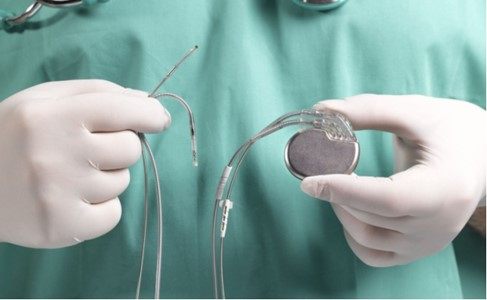
These implantable electronic devices typically consist of microelectronic circuits and batteries that provide energy. To protect microelectronic circuits and batteries, they need to be sealed and packaged in metal casings. If the seal is lost, body fluids can directly penetrate into the metal packaging, causing short circuit failure of the microelectronic circuit and endangering the patient's life.
Laser welding technology is the most commonly used connection and sealing technology for implantable medical devices. The metal shells of implantable medical devices generally use titanium and titanium alloys. However, titanium has a strong ability to absorb hydrogen, oxygen, and nitrogen at high temperatures. Therefore, the laser welding process needs to be carried out in an inert gas sealed environment.
In laser welding, the control of laser energy plays a vital role in welding quality. When laser irradiates a metal surface, 60% to 80% of the laser energy will be reflected at first. As the temperature increases, the metal's absorption rate of laser energy will gradually increase. When it reaches the boiling point, it can absorb close to 90% of the energy.
Passive Medical Equipment
Active implantable medical equipment has very strict requirements for the sealing of the laser welding process. The most commonly used fine leak detection method is helium mass spectrometry. The military standard MIL-STD-883 (1014) stipulates fine leak detection methods. The application of laser welding in passive medical equipment is mainly for connection, which can achieve precision welding of tiny parts.
Cardiac stent
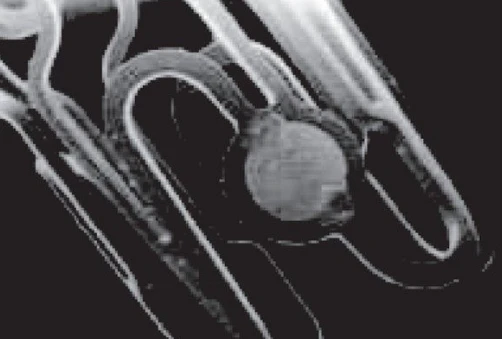
The cardiac stent, also known as the coronary stent, is a medical device commonly used in cardiac interventional surgery and has the function of unblocking arteries and blood vessels. The main materials are stainless steel, nickel-titanium alloy or cobalt-chromium alloy.
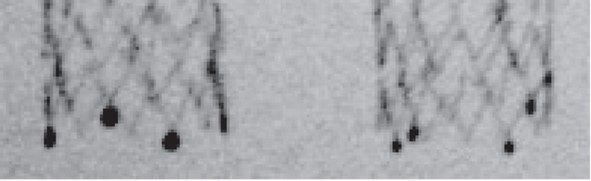
During the process of the heart stent being transmitted all the way to its destination, the radiopaque elements at both ends of the stent can clearly see its traces and expansion status. The radiopaque markers can be made of precious metals such as gold, tantalum, platinum and iridium, and the markers can Riveting, this molding process can use a laser with a minimum spot diameter of 40μm (0.04mm) to weld the disc-shaped marker into a special eyelet.

Gastroscopy biopsy forceps
The gastroscopic biopsy forceps used in medical treatment need to penetrate deep into the patient's body, so the quality requirements for the biopsy forceps are very strict. Each component of the biopsy forceps needs to meet a certain tensile strength and good appearance, especially the surface is not allowed to have Burrs, etc.
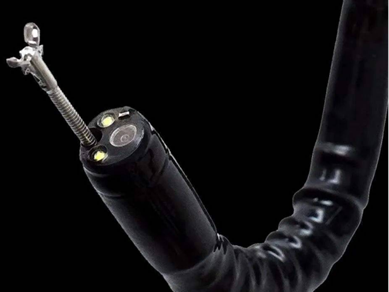
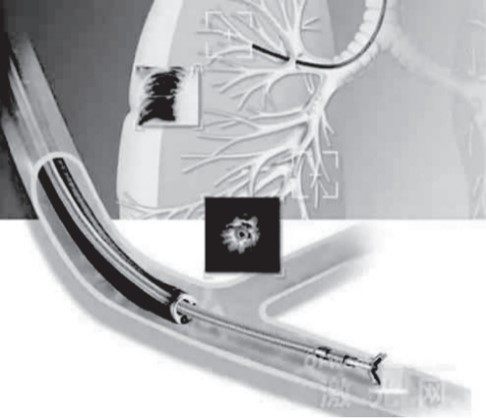
In the previous production and processing process, the front end of the gastroscope biopsy forceps was combined by riveting, resistance welding, etc. The riveting method will leave burrs and other defects on the surface of the puncture gun, and resistance welding will also cause the parts to produce a lot of damage. Large deformation affects the practical application of the puncture gun. However, laser welding technology has the characteristics of non-contact processing, narrow thermal influence range, high efficiency, and high processing accuracy. It can realize flawless, groove-free, crease-free, and seamless instruments in the medical field. Burr and crack-free welding requirements.
The introduction of laser welding technology makes medical devices more miniaturized, simpler and more comfortable. In addition to laser welding, other laser processing technologies also have great potential in the manufacturing of medical devices, such as laser cleaning, laser cutting, laser drilling and laser micromachining.


